Bottling up success: iPac Packaging Innovations
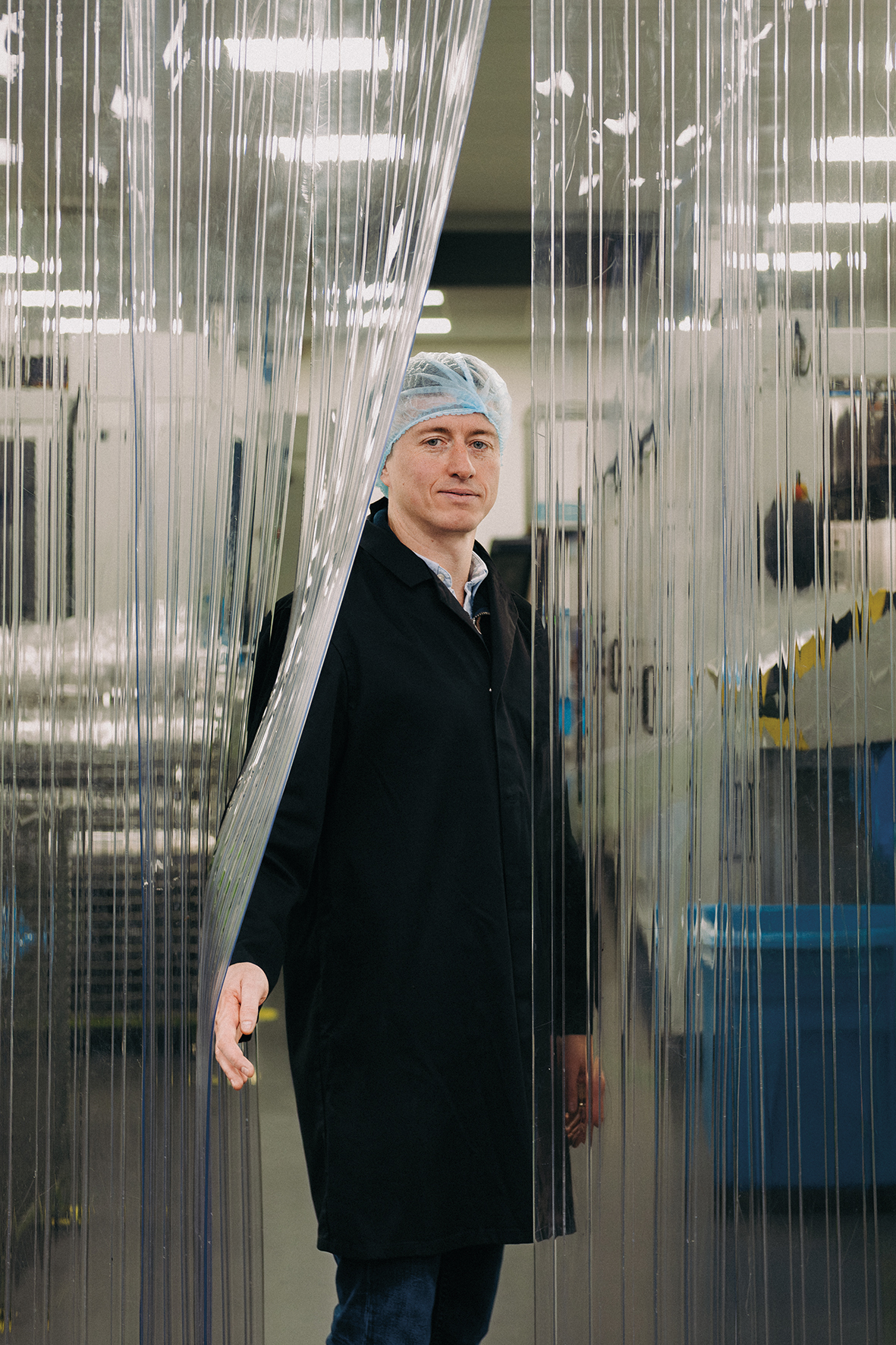
Business growth demands clarity, resilience and the right people beside you. For Jonny Catto, managing director of Gateshead-based iPac Packaging Innovations, the Scaleup North East programme – and the guidance of partner Tony Brooks – delivered exactly that, helping accelerate the company’s expansion in a highly competitive sector. Here, Jonny speaks to Peter Anderson about the company’s rapid growth, its sustainability-led approach and the difference Tony’s guidance has made.
January 19, 2026
When the 60,000 competitors in last year’s Great North Run reached the first drink station, it’s unlikely many of them spared a thought for the plastic water bottles in their hands.
Fresh from the thrill of crossing the Tyne Bridge, most were settling into their rhythm and certainly not thinking about whether those bottles would ever be recycled.
But one runner could have traced their journey precisely.
Among the mass of participants was Jonny Catto, managing director of iPac Packaging Innovations, whose headquarters sit just a stone’s throw from the famous route on Gateshead’s Albany Road.
For Jonny, the discarded bottles weren’t waste.
They were raw material.
In the days following the race, hundreds of thousands of bottles entered a North East-wide recycling loop before being thermoformed into food packaging at iPac’s Gateshead plant – a collaboration between iPac, The Great Run Company, South Tyneside Council and Premier Waste.
It was a live demonstration of circularity in action, showing that so-called problem plastic can, with the right systems and right mindset, become something valuable again.
In many ways, the project encapsulated everything iPac stands for: a North East manufacturing ethos, a commitment to sustainability grounded in engineering rather than sentiment, and a belief that innovation must be practical, measurable and rooted in reality.
A few months later, walking the factory floor with Jonny as trays glide off the production lines, it becomes even clearer how iPac has grown from a ten-person start-up with £500,000 turnover in 2017 to a 100-staff strong manufacturer generating more than £24 million today.
Yet when the firm, which produces thermoformed packaging for the food and pharmaceutical industries, was founded in 2016, Jonny – who had left London and a successful career at Deloitte to return to his native North East and start a family – knew he was entering what he describes as a “mature, very competitive industry” dominated by large international groups.
But with the support of his father-in-law Harry Reed – a thermoforming veteran with more than 40 years’ experience – the business quickly found its footing.
Jonny says: “People ask us what our USP is, and it’s not rocket science.
“Our differentiators have always been customer focus, quality, quick turnaround, quick decision-making and flexibility.
“And as soon as we got a foot in the door, clients saw the difference straightaway.”
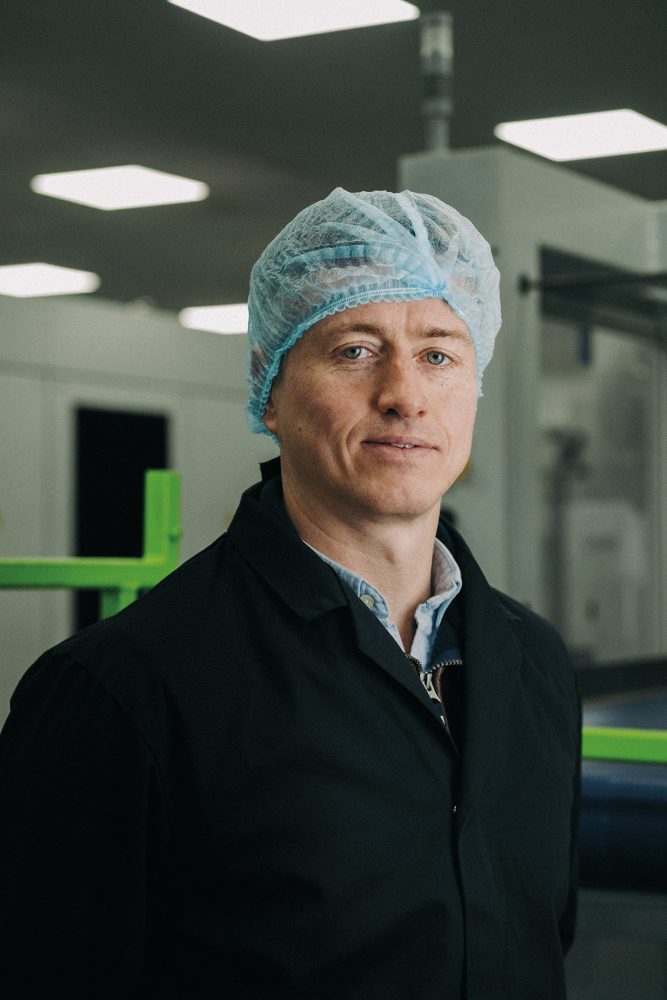
As Jonny shows us examples of iPac’s pots, tubs and trays, it’s easy to see why the firm’s reputation for quality is so strong.
He says: “A lot of the industry is very low margin, so people buy the cheapest input materials.
“We try and compete in a different way – through in-house efficiency.
“We run a lean, super-efficient site, so we don’t have to use cheap, low-quality material.”
And that commitment extends beyond the product.
Jonny says: “Your mentality on the shop floor makes a difference.
“We’re not a minimum wage employer, and that matters.
“When you’ve got a good team environment, people actually care about their job – and they look after your quality for you.”
Another key differentiator is iPac’s commitment to genuine, engineering-led sustainability.
From the outset, the firm has used recycled PET made from bottle flake, designing products to be as lightweight, recyclable and contamination-free as possible.
And iPac’s focus on clear mono-PET and removal of pads and laminates has also helped it stand apart.
Jonny says: “From day one, our approach was ‘design to recycle’ – how can we make products as lightweight as possible and get out anything that contaminates?
“Our industry is very circular, and I don’t think people appreciate that.
“The main material we use is bottle flake, recycled plastic bottles, and pretty much every bit of development we do has a sustainability angle.”
For Jonny, who became managing director in 2020 after starting out as finance director, his greatest strength has always been his willingness to take calculated risks alongside an ability to pivot when needed.
That flexible mindset has driven iPac’s expansion.
In 2023, the firm opened a second site in Tanfield, in County Durham, while a new 10,000sq ft extension at its Gateshead base has further strengthened operational resilience.
And with plans to bring extrusion in-house, install new thermoforming lines and continue investing at scale, iPac’s growth shows no signs of slowing.
Jonny says: “The next big step is vertical integration – bringing more of the process in-house.
“We currently buy in all of our sheet, but we’ll soon be able to extrude it ourselves directly from bottle flake.
“New thermoforming lines will give us another jump in capability too.
“It all forms part of a £10 million investment programme over the next 18 months, and extrusion alone will mean employing around 15 new people.”
Jonny is quick to credit the support he has received along the way, particularly from the Scaleup North East programme, which connects founders with experienced partners to help shape growth plans.
For Jonny, the chance to work with Tony Brooks – who built a two-person engineering firm into a multi-million-pound operation – has proved “transformative”.
He describes Tony as the ideal “sounding board” and a “source of accountability”.
Jonny says: “Tony understood our business and flagged things he thought we could benefit from.”
A standout example was Tony directing iPac to a Made Smarter grant, which funded a full warehouse management system.
Jonny says: “We previously had a very manual, Excel-based system that was creaking at the seams.
“We were handling a couple of thousand pallets a week – you can’t manage that on a spreadsheet – and the new system has been an absolute game-changer.”
Just as valuable, Jonny says, have been Tony’s industry introductions.
He adds: “Whether it’s one of his colleagues at RTC North, who’s better suited to a particular challenge, or someone from his wider network, Tony always seems to know someone who can help.
“He’s been there and done it; he’s built and scaled a business, so being able to bounce things off him is invaluable.
“It has proven massively beneficial for us.”
iPac Packaging Innovations
LinkedIn: iPac Packaging Innovations
Scaleup North East
To be eligible for Scaleup North East support, companies should be:
- Businesses, including start-ups, which are scaling or can demonstrate significant growth potential
- Based in the areas of Northumberland, North Tyneside, South Tyneside, Newcastle-upon-Tyne or the Gateshead Metropolitan Borough
Ideally in the following sectors, although others will be considered:
- Digital and technology
- Health and life sciences
- Low carbon and green growth
- Creative industries
- Advanced manufacturing
The following sectors are not eligible for support:
- Agriculture
- Fishery and aquaculture
- Banking
- Insurance
Firms should ideally demonstrate a growth rate of 20 per cent over two previous years, or high growth potential, demonstrating growth of above ten per cent and forecasting future growth of at least ten per cent, with increase in employment
For more information, visit www.scaleupnortheast.co.uk
Scaleup North East is delivered by RTC North and funded by the Government through the UK Shared Prosperity Fund. The programme is led by the North East Combined Authority, covering the seven local authority areas of County Durham, Gateshead, Newcastle, North Tyneside, South Tyneside, Sunderland and Northumberland.
The UK Shared Prosperity Fund
The UK Shared Prosperity Fund proactively supports mission-delivery: pushing power out to communities everywhere, with a specific focus to helping kickstart economic growth and promoting opportunities in all parts of the UK.
The Government’s Autumn Budget announced a further £900 million of funding for local investment by March 2026, with a transition year administered throughout the former North of Tyne region by the North East Combined Authority.
For more information, visit www.gov.uk/government/publications/uk-shared-prosperity-fund-prospectus
RTC North
RTC North is a leading provider of business support and innovation services, working with organisations to unlock their potential and achieve sustainable growth. With a wealth of expertise and a commitment to excellence, RTC North empowers businesses to overcome challenges, embrace opportunities and drive success in a rapidly evolving marketplace.
LinkedIn: RTC North
January 19, 2026
- Promoted