NEL Fund Managers: A conduit to unlocking growth
Access to finance is a crucial component of any small and medium-sized business’ growth plan. And helping make the case for institutional investors to engage with this underserved part of the market is NEL Fund Managers. Here, chief executive Paul Scott speaks to Peter Anderson about the funding gap, NEL’s enhanced capabilities and the organisation’s ambition to unlock capital for firms to expand across the North.
January 19, 2026
For many small and medium-sized companies, scaling can feel like climbing a ladder with missing financial rungs.
Yet for Paul Scott, the situation also presents an opportunity.
And as chief executive of Gateshead-headquartered NEL Fund Managers, he and his team are ideally positioned to address it.
He says: “Our external research and ongoing conversations with businesses have demonstrated that there is a sustained gap in financing requirements for ambitious, growing SMEs.
“The funding options tend to be bank funding or private equity.
“But if businesses need something in the middle, it becomes a real challenge.”
Bank finance is still valuable, he says, but is often “more formulaic and volume-driven” because of banks’ business models and regulatory requirements.
And while a wave of direct lenders entered the market following the 2008 financial crisis, they too have largely moved out of reach for many SMEs.
Paul says: “The direct lenders that were involved ten to 15 years ago have all migrated upmarket.
“They’re now defining mid-market companies as those generating between £20 million and £50 million EBITDA.
“Then there are some players focused on what we call the lower mid-market, but they’re typically looking at businesses generating between £10 million and £20 million EBITDA.
“There’s a huge swathe of companies that aren’t being served by flexible capital.”
For NEL, the gap lies with profitable SMEs that sit above existing public sector interventions and mainstream private capital.
Paul says: “We see the short-term market opportunity as businesses generating turnover of £20 to £25 million, but the market gap extends beyond that.
“Interventions like the Northern Powerhouse Investment Fund are a great catalyst; however, the programme caps out investment at £2 million for debt-led propositions.
“There’s definitely an opportunity to provide finance for a cohort of businesses that have bespoke financing requirements between £2 million and £10 million that cannot be met from traditional funding sources or financing options that are currently available.”
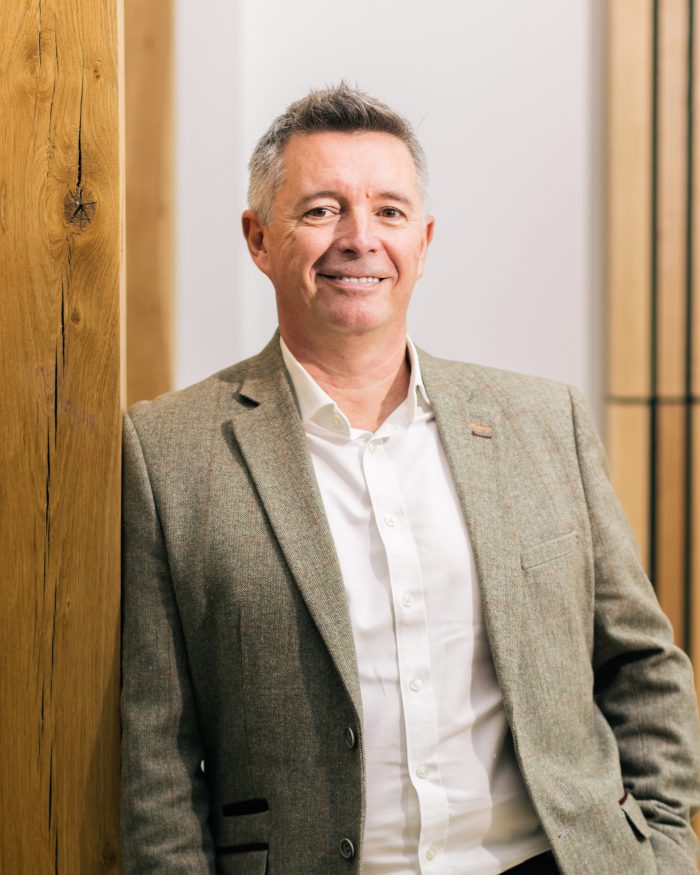

Alongside the clear market need, Paul sees “significant opportunity” for pension funds and other long-term investors to step in.
He says: “We need to continue to demonstrate it is an attractive thing for institutional investors to do.
“We’ve proven you can deliver attractive returns and impact in the SME space through our partnership with British Business Bank, and there’s huge potential to expand this into larger businesses working with institutional investors.
“If you look at where the innovation is, where the job creation is, it is often in the SME space.”
However, Paul says the landscape is regularly affected by a misconception of risk.
He says: “Institutional investors may perceive that because they’re smaller businesses and less diversified, it presents a more challenging risk profile for investing, so they don’t want to invest there as part of their asset allocation.
“But it’s more nuanced than that.
“There’s a huge population of SMEs which in turn provides an opportunity to be selective and to work with the best businesses that have strong value propositions and high-quality management teams that can scale their business.
“With innovative propositions, SMEs can often out-compete larger incumbents, their agility helps with resilience and they are often less exposed to macro factors that can create headwinds such as exchange rates, international supply chains or tariffs.
“If you then factor in that transactions typically carry lower leverage, with strong documentation and the opportunity to conduct high-quality diligence – not always apparent now in the mid-to-large cap market due to competitive pressures – you begin to appreciate how there is more downside protection than initially thought.
“Align this with our proactive approach to portfolio management, which further mitigates risk and drives value creation, and you can begin to see how we are delivering impressive risk adjusted returns for investors.”
With the funding gap so clear, NEL has been steadily building capacity and capability to help bridge it.


Over the past 18 months, Paul has overseen a significant evolution, which has strengthened NEL’s team, sharpened its value proposition and laid the foundations for a more ambitious future.
At its heart is a strengthened investment team.
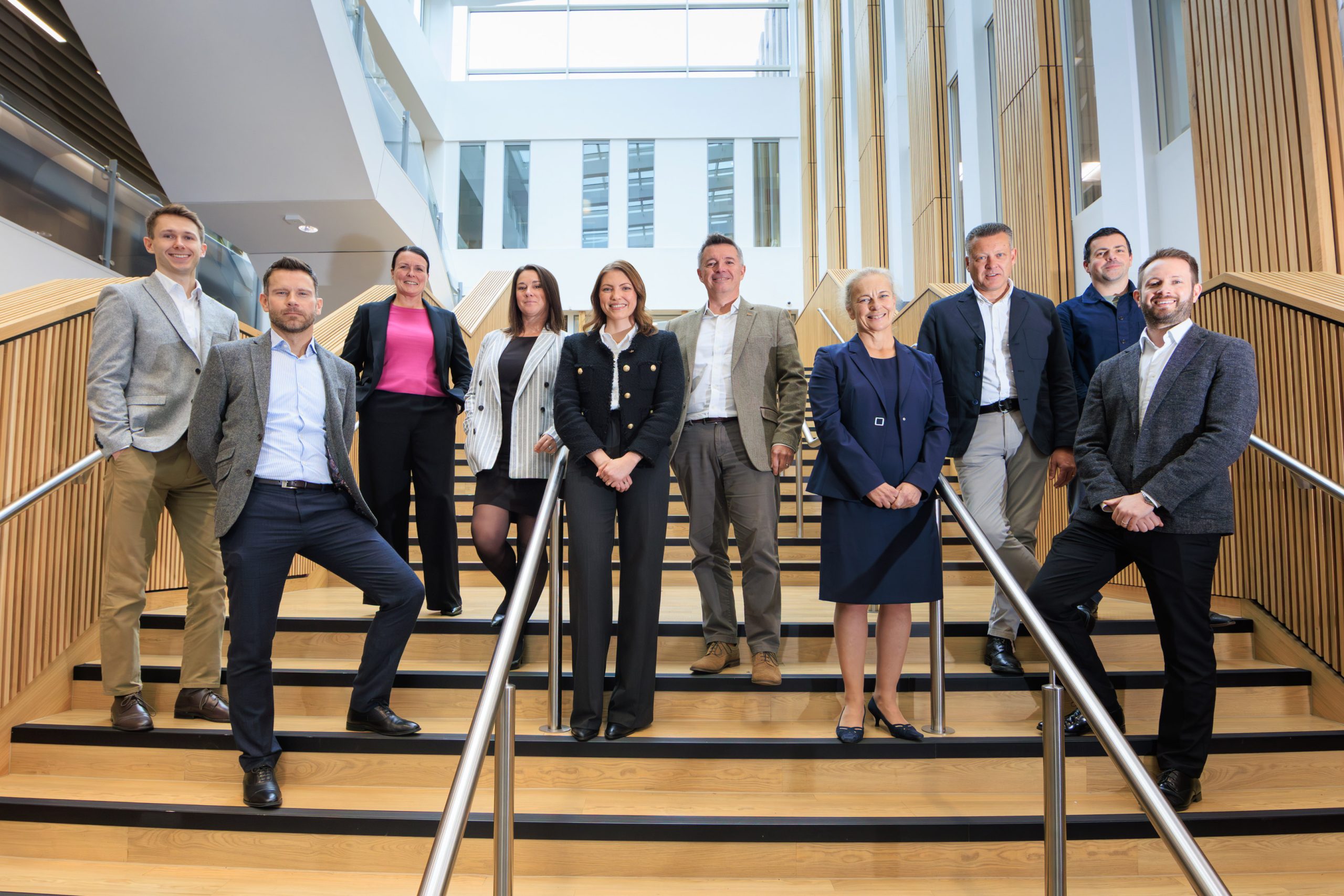
Alongside long-standing team members, new hires such as investment executives Michael Williams and Rachael Munro, as well as head of investments James Katirai, have added significant firepower.
And as NEL looks to the future with increased funds under management, there will be opportunities to create more high-quality jobs in the region.
Paul says: “We’ve continued to refine our investment processes, improve our value proposition and, while I may be a little biased, I don’t think there’s a team as experienced in the private credit space regionally.
“There is more than 200 years’ investment experience, and we’ve seen everything from the dot com bubble through to the financial crisis, European debt crisis, Brexit, COVID-19, energy price spikes, interest rate hikes and the latest geopolitical challenges.
“We’ve also operated right across the deal-size spectrum, both in the UK and internationally.
“We’ve got ex-bankers, people who’ve worked in private equity, corporate finance and audit.
“It means we can bring the right support to help any business grow – there’s not much we haven’t seen.
“And we’re much more engaged from a value creation perspective too.
“We sit with management teams to work through things like franchise development, digital transformation or how to build an effective board.
“We’ve now got the breadth of expertise to make that support meaningful and also tap into our extensive panel of experienced advisors.”
While helping solve access to finance challenges, selectivity also remains central to NEL’s approach.
Paul says: “We’re conscious we’re investing capital on behalf of British Business Bank, so we want to be good custodians but also generate a good return and deliver impact.”
That approach is reflected in the performance of NEL’s work through the Northern Powerhouse Investment Fund II, through which it has supported a wide spectrum of North East firms.
With its Stockton office now bringing the team closer to Teesside businesses, activity has accelerated over the past year, underpinning a particularly strong period for the organisation.
Paul says: “We’re north of 45 investments, and they’re all performing well.
“They’re providing investors with attractive returns, and the way we structure the capital gives businesses the headroom to grow.”
And Paul says the momentum is feeding through on every front.
He adds: “It’ll be a record year for deployment.
“And in terms of portfolio performance, it’s the best it has ever been.”
The significance runs deeper than the numbers, though.
A fully performing portfolio, strong investor returns and disciplined origination point to something more important: NEL has built a platform ready to be leveraged, enabling the organisation to broaden its reach across the wider North.
And as the only private, direct-lending alternative finance provider headquartered in the North East, NEL sees its regional anchoring as a genuine point of difference.
Paul says: “I can probably count on the fingers of one hand the number of investment managers that are headquartered outside London and focused on delivering flexible capital, particularly in this segment.
“And we’re the only one in the North East.
“A strong NEL is only going to build more resilience into the region’s finance ecosystem.
“We’re anchored here and not susceptible to fluid capital flows or strategic decisions from outside the region, which creates stability, impact and has a multiplier effect.”
It is a position that chimes with the ambitions of the region’s two combined authorities, as deeper devolution places renewed emphasis on accelerating growth, backing innovation and driving high-value job creation.
Paul adds: “There’s a real opportunity for combined authorities, institutional investors and someone like NEL to bring it all together and be the route to market for SMEs.
“The opportunity is hiding in plain sight.
“It just needs someone to unlock it – and that is what we aim to do.”
NEL Fund Managers
LinkedIn: NEL Fund Managers
January 19, 2026
- Promoted