Bin the Wipe with Northumbrian Water Group
Northumbrian Water Group’s award-winning Bin the Wipe campaign has gone from regional venture to national acclaim, capturing the attention of households, environmental groups, the Government and even primetime BBC television cameras. Here, the organisation tells N magazine about the endeavour and why, despite great progress having been made, it won’t stop in its quest to ensure wet wipes are disposed of in the correct manner.

January 19, 2026
Northumbrian Water Group
LinkedIn: NWG (Northumbrian Water Group)
When Northumbrian Water launched its Bin the Wipe campaign in early 2020, the aim was simple: tackle one of the most important and persistent problems in the wastewater network – wet wipes flushed down toilets.
They are a convenient thing to have on hand, whether it’s to remove your make-up, wipe your child’s chocolate-covered face or for cleaning.
But flushing them can soon become a nightmare.
Often marketed as flushable, wipes do not break down like toilet paper.
Instead, they accumulate in pipes, causing blockages that lead to sewer flooding, environmental damage and costly repairs.
Figures show wipes account for more than 60 per cent of sewer blockages in the North East, costing the UK water industry around £200 million annually to clear and causing untold problems for customers and the environment.
Six years ago, Northumbrian Water’s teams came up with the idea for a campaign to change how wastewater works, a regional initiative to really change customer behaviour through education and engagement.
The message was clear.
Bin the Wipe.
And the idea was straightforward.
Teams would visit hotspot areas, where blockages were a problem, and monitor sewer networks for wipes.
In the process, they came up with some innovative man-made tools, devised through careful trial and error using prototypes of spiked tools.
Eventually, they created the Porcupine, Barbarian and Goliath, which can trace wipes back to their source.
Supported by integrated marketing and social media campaigns, as well as partnerships with housing associations and community events, the campaign snowballed into something that quickly became well-known and supported across the region.
In the areas targeted by the teams, where work was introduced and trialled, the number of wet wipe-related blockages, internal flooding and external flooding reduced by more than 50 per cent.
News of these incredible results travelled across the water industry and, in 2023, Water UK adopted the initiative as a national campaign.
This expansion brought that one simple message to millions more households across the country, bringing behaviour change at scale and reaching 41 million on social media alone.
By the end of 2024, Northumbrian Water’s own campaign had reached hundreds of thousands of households and gained praise from customers and environmental groups.
Its success earned industry recognition too, including the Best Long-Term Campaign Award at the CIPR Excellence Awards.
The hard work carried on to educate the people of the North East, while even harder work was underway behind the scenes.
Engagement with customers, partners and stakeholders impacted real change, and the campaign eventually impacted policy.
In November 2025, the Government announced a ban on the sale of wet wipes containing plastic, which is set to come into force by spring 2027.
This new legislation, which falls under environmental protection regulations, received overwhelming public support and aims to reduce plastic pollution in rivers and seas by tackling the root cause of sewer blockages.
Under the new law, retailers will face fines for selling wipes containing plastic, with exemptions for medical use and certain business applications.
Manufacturers are being encouraged to switch to biodegradable alternatives, such as cotton or bamboo.
Still, the message remains the same.
No wipes should be flushed.
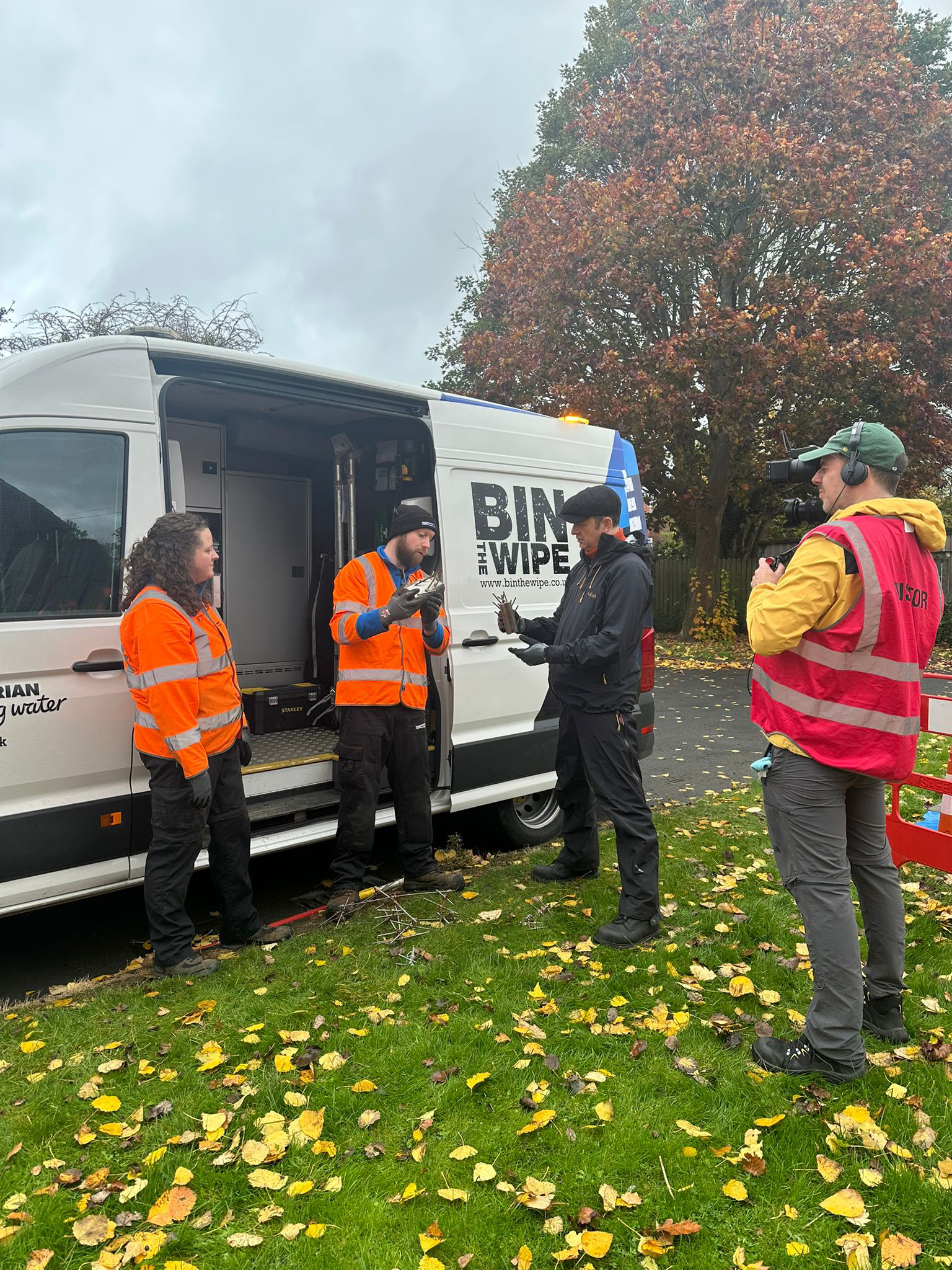
In December, Northumbrian Water’s homegrown campaign was thrust into the national spotlight when it featured on BBC One family favourite The One Show.
Filmed in Darlington, the segment showcased Northumbrian Water’s innovative approach to tackling blockages.
Viewers watched as local sewage maintenance operatives Emily and Mark demonstrated the vital nature of their work.
The programme also highlighted Pipebot Patrol, the world’s first autonomous sewer robot capable of inspecting miles of pipeline over a 30-day period and preventing blockages before they occur.
Simon Cyhanko, head of wastewater networks, also featured on the show, and spoke about how he has seen the campaign grow from an idea on a page to the national stage.
He says: “It’s amazing to see how our campaign has rocketed over the years, but it’s not without the hard work and dedication of our team.
“Bin the Wipe really shows how a focused, behaviour-change initiative can deliver tangible environmental benefits and literally change the law.
“This is a real combination of community engagement, technological innovation and strategic communications, and this new legislation will help protect our beloved waterways for generations to come.”
As the UK prepares for the 2027 ban on wipes containing plastic, the message remains as relevant as ever.
Bin the Wipe, don’t flush it.
Small changes in daily habits can make a big difference, preventing sewer blockages, protecting homes and safeguarding rivers and seas.
This campaign, which started off small using man-made inventions and a team of 12, has grown into something making a countrywide difference.
It has helped change legislation and is helping reduce the devastating impacts of sewer flooding, not only in this region but across the country, improving service for Northumbrian Water’s customers and making a positive difference to the environment.
January 19, 2026
- Build & Sustainability