Helping future leaders find their voice
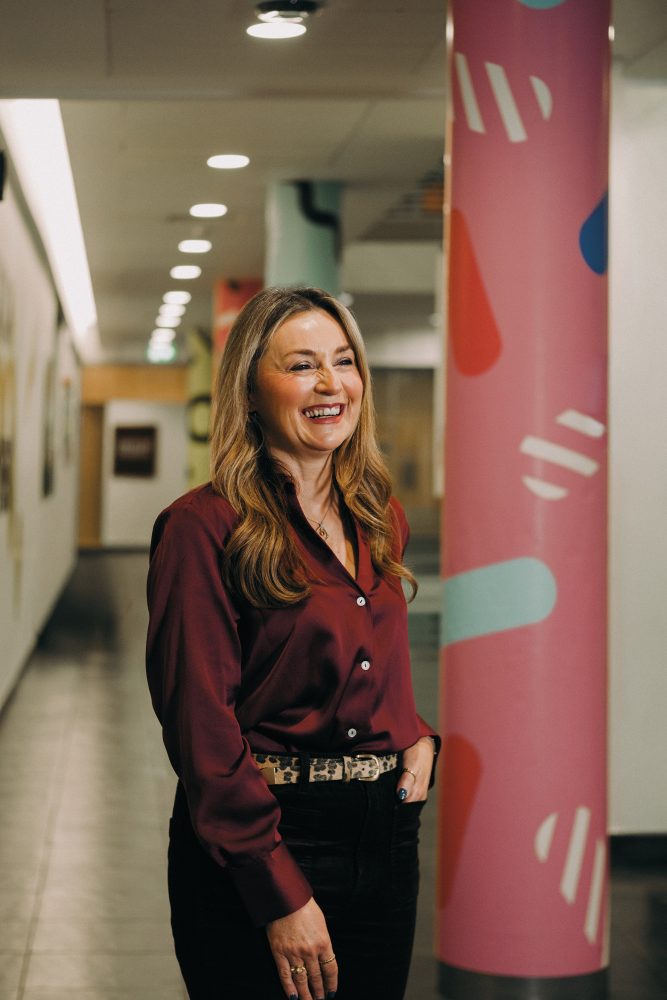
Employers across the North East are increasingly flagging concerns that too many people are entering the workplace without the confidence and communication skills needed to progress. For Nadine Hudspeth, director of brand and learner experience at Gateshead College, that challenge has helped shape the Future Leaders Programme, a new initiative delivered alongside the North East Chamber of Commerce. Here, Nadine speaks to Peter Anderson about the thinking behind the venture, the skills it is seeking to develop and its ambition to build a confident, connected pipeline of future leaders for the region.


March 14, 2026
From WhatsApp groups and Teams calls to emails, DMs and social media feeds, modern life offers more ways to communicate than ever before.
For many people, digital platforms have become the default – and often the only – way we connect, whether at work, at home or somewhere in between, as conversations arrive in a constant stream of pings, pop-ups and push notifications.
Yet the irony of this hyper-connected world is that we often seem worse than ever at communicating with one another.
We can juggle multiple group chats and scroll through fatuous TikTok videos and Instagram feeds, yet hesitate when it comes to picking up the phone and avoid, at all costs, the unscripted realities of face-to-face conversation.
With our heads down, earbuds in and attention fixed on screens, genuine human interaction is increasingly fleeting, as eye contact, tone and emotional nuance have been replaced by soundbites, shorthand and the occasional passive-aggressive full stop.
The impact of this shift – accelerated by the pandemic and prolonged periods of isolation – is now being felt in workplaces across the region.
Employers are reporting growing gaps in communication, confidence and presence among early-career professionals, not as abstract concerns but as everyday challenges affecting how people interact with colleagues and customers alike.
These issues were brought into sharp focus through Government-backed Local Skills Improvement Plans (LSIPs).
As part of the North East Chamber of Commerce’s engagement with businesses, more than 3500 employers highlighted an urgent need for stronger verbal communication and professional confidence, citing a decline in people’s ability to engage in workplace conversations or manage client interactions.
For Nadine Hudspeth, director of brand and learner experience at Gateshead College, those findings resonate deeply.
Having spent much of her career building networks, developing talent and championing confidence as a skill in its own right, she understands that communication is not simply about what is said, but how people feel empowered to say it.
It is this belief in connection, self-awareness and helping people realise their potential that underpins her approach – and sits at the heart of the Future Leaders Programme.
Nadine, who is coordinating the programme with Erin Newey, North East Chamber of Commerce strategic partnerships manager, says: “I’ve worked with the Chamber for many years and have benefited from what it’s given me – professional development, building a network and relationships that have genuinely helped me do my job better.
“You realise being part of the Chamber isn’t just about what you can do in your own organisation.
“It’s about what you can do beyond that, by working with others and how you can start making a difference outside the walls of your company.”

The idea behind the programme was also driven by a familiar pattern.
Nadine says: “You often go to events and see the same brilliant people who consistently show up and contribute.
“So you start asking, ‘how can we also create an opportunity for emerging leaders – the people coming through with new perspectives and ideas?’
“When the same individuals are working hard on the same priorities, it’s a real strength, but it also shows how important it is to bring in different voices to enrich the conversation and it’s always interesting to shake things up.
She adds: “The Future Leaders Programme is about identifying that next generation early and creating the conditions for them to step forward.
“For me, it’s always been important to create real opportunities for people to develop and grow, not in a forced or formal way, but by giving them the space, support and confidence to realise what they’re capable of.
“That’s why we’ve designed the programme as a supportive environment where people can build confidence, learn practical skills and connect with others.
“Hopefully, they’ll leave the sessions feeling fired up, having had the chance to practice some of their new skills with people they feel comfortable with.”
Nadine says the programme reflects the wider shifts in how people learn, work and interact – many of which were accelerated by the pandemic.
She says: “We really saw the impact of isolation through COVID-19 on students and staff.
“We’ve seen it in confidence, in mental health and wellbeing, and in how comfortable people feel speaking up.”
That understanding has shaped Gateshead College’s approach to skills development more broadly, with a focus on creating the right conditions for people to succeed in different ways.
Nadine says: “Not everyone will want to contribute in the same way.
“So how do you design learning differently, create safer spaces and not assume someone isn’t engaged just because they contribute differently?”
At the heart of that approach is what Nadine describes as the college’s longstanding “employment edge” ethos – the belief that success at work requires far more than qualifications alone.
She says: “You need character, confidence and resilience.
“You need the chance to network, to meet employers, to understand what’s out there and to develop the belief to step into opportunities when they arise.”
The Future Leaders Programme, she says, sits firmly within that thinking, responding directly to employer feedback while recognising that people’s journeys into confidence and leadership are rarely linear.
Nadine says: “Everyone’s path is different.
“But if we can be more curious, more human and create the right opportunities, people have a much better chance of realising their capabilities.”
The programme, which is partly funded by Tees Valley and North of Tyne LSIP, is structured around three core networking events delivered across the year, each combining professional development with peer connection.
Every session brings together an inspiring speaker, a bite-sized learning element and time to build relationships, with participants also able to deepen their learning through smaller, full-day workshops delivered by Gateshead College.
The focus throughout is on foundational leadership skills – including emotional intelligence, personal brand and communication – with an emphasis on practising those skills, not just hearing about them.
For Nadine, the structure is deliberate.
She says: “You get the chance to build a network, be inspired and learn something.
“This is not about sitting back and being talked at.
“We want people to feel they’ve got agency in it – to roll their sleeves up, take part and come with a clear sense of what they want to get out of it.
“It’s got to be dynamic and energetic.”

And for Nadine, the end goal is not simply a successful programme, but the beginnings of something that lasts.
In the immediate term, she hopes to see a cohort complete the programme together and take real pride in being part of its first chapter.
But the ambition stretches far beyond certificates or completion.
Nadine hopes participants will carry their experiences with them into new roles, promotions and opportunities, while continuing to draw on the connections they have made.
She adds: “I’d love to think someone is going for a promotion or an interview and saying, ‘I’m really proud to have been part of Future Leaders’.
“Not just because of what it gave them during the programme, but because of what they’re doing now – who they’re working with and what they’re helping make happen.”
Ultimately, Nadine hopes the programme will help establish a recognised and trusted Future Leaders community, one that grows with each cohort and helps strengthen the region over time.
She adds: “If we can create a confident, connected community of people, who realise they’ve got something to contribute, that’s when really good things start to happen.”
Future Leaders Programme
Delivered by the North East Chamber of Commerce alongside Gateshead College, the programme is aimed at early-career professionals. It delivers practical development support in communication, confidence and emotional intelligence through high-profile networking events and optional full-day workshops delivered by Gateshead College.
North East Chamber of Commerce
LinkedIn: North East Chamber of Commerce
Gateshead College
LinkedIn: Gateshead College
March 14, 2026
- Promoted