The future of water quality takes flight: Northumbrian Water Group
Northumbrian Water Group is rolling out a unique project aimed at delivering a step-change in water quality monitoring. Using drones and robotics to analyse samples in minutes, the organisation says the venture, known as Smart Skies Healthy Waters, will provide bathers with betterinformed decisions before entering the sea along the North East coast. Here, the Pity Me-headquartered utilities firm tells N magazine more about the project and how it forms part of a wider portfolio of environmental improvement endeavours.

November 16, 2026
Northumbrian Water Group
www.nwl.co.uk
LinkedIn: NWG (Northumbrian Water Group)
The North East is home to some of the country’s most beautiful coastline.
From the sandy beaches of Northumberland to the dramatic shores of County Durham, our beaches attract millions of visitors throughout the year.
And while the colder months might put many off a dip in the North Sea, the surfers, wild swimmers and those among us who brave it will still be checking the weather forecast before heading out.
But what if they could also access near real-time information about the quality of the water? It’s a question that has sparked an ambitious innovation project at Northumbrian Water, one that could transform the way bathing water quality is monitored in future.
The water company has been working with partners from across the technology and academic sectors to explore how drones, robotics and mobile laboratories could provide near real-time information.
The idea of Smart Skies Healthy Waters is to 70 make environmental analysis more accessible and faster than ever before.
Bathing water quality is looked after by the Environment Agency, which regularly collects and tests samples from designated waters throughout the bathing season.
Northumbrian Water also carries out its own monitoring and investigations when needed; however, gathering and analysing samples can be a manual and time-consuming process.
It involves wading into the water with a sampling container attached to a pole, before transporting it away for analysis, with results only providing a snapshot of conditions at a particular point in time.
Today’s world moves much faster – people have instant access to information at the touch of a button, and environmental information is expected to keep pace.
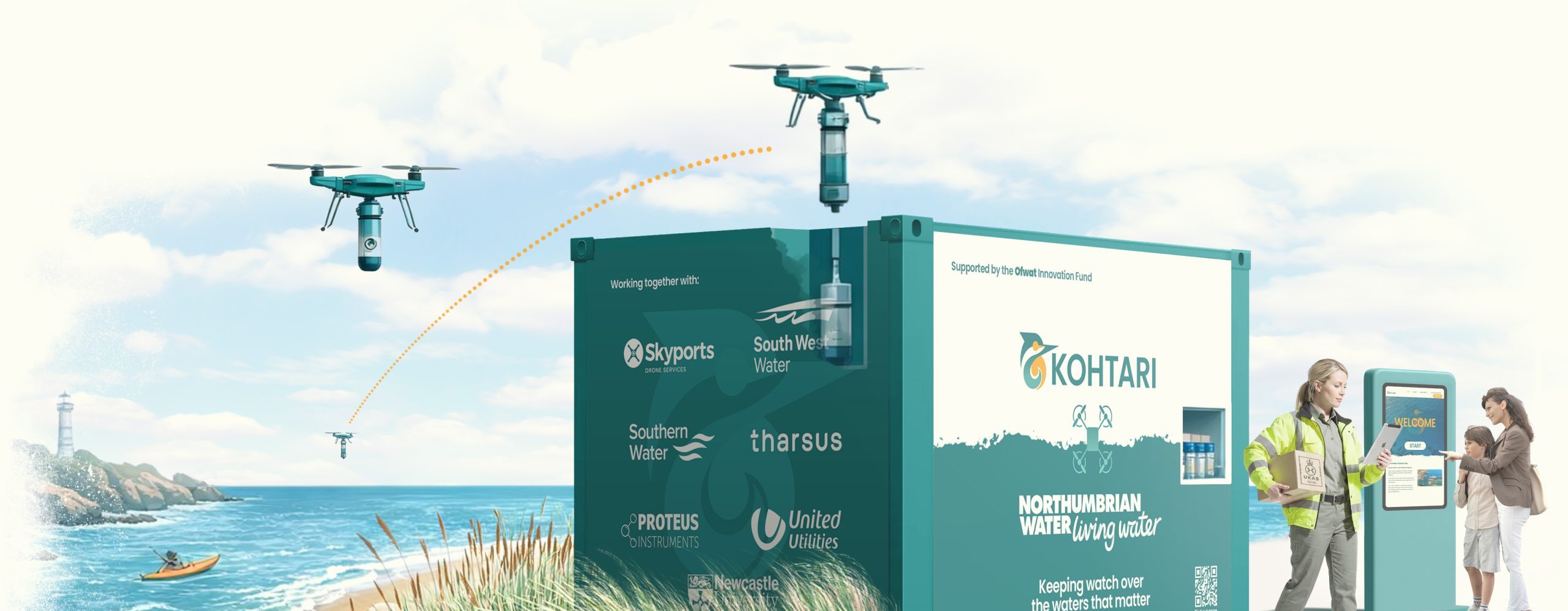
In a move that sounds more fitting for science fiction than the water industry, automated drones will hover above the waves to collect water samples from local beaches, then fly them back to mobile laboratories dotted at strategic points along the North East coastline.
Once there, a robotic arm will process the sample and carry out rapid analysis. The whole process, which would be entirely automated, would provide results in less than an hour.
Eventually, the idea is for that data to be made available to beach users in a simple way, potentially using a red, amber and green rating system, to help people make more informed decisions before entering the water.
The project won’t replace existing monitoring methods carried out by the Environment Agency, but will complement them by providing a more efficient and up-to-date picture of the conditions along our coastline.
Clean and healthy bathing waters matter to local communities, tourism businesses and the thousands of people who enjoy the North East’s beaches every year.
They are a vital part of what makes the region such a special place to live, work and visit For Northumbrian Water, this project is part of a wider effort to better understand the environment and explore how technology can help provide faster insights and better information.
Pioneering trials are expected to get underway next year, with beaches at Seaham, in East Durham, and Hendon, in Sunderland, both being considered as potential locations for the first testing phase.
These hubs will see the first mobile labs, roughly the size of a shipping container, positioned on Northumbrian Water sites near the coast.
Automated drones will launch from the hubs, collecting water samples from the sea before docking back at base.

If successful, the initiative would be the first of its kind in the world.
Angela MacOscar, Northumbrian Water head of innovation, says: “Bathing water quality can change quickly, particularly after weather events, so the sooner we can understand what’s happening, the better.
“As someone who lives right on the coast, I know how important our beaches are to people.
“We’re lucky to have some fantastic beaches and we’re passionate about doing everything we can to protect and improve them. “This project is about helping us build a better picture of what’s happening in our coastal waters.”
The project, which was awarded a £6 million boost by the Ofwat Innovation Fund, is being delivered through a consortium of partners that includes water intelligence expert Kohtari, Skyports Drone Services, robotics expert Tharsus, sensor specialist Proteus and Newcastle University.
However, Smart Skies Healthy Waters is only one example of how Northumbrian Water is exploring new ways to better understand and protect the environment.
Alongside the bathing water project, the company has been trialling a range of other technologies designed to identify potential issues earlier and reduce their impact on the environment.
They include the award-winning Pipebot Patrol, a miniature robot that travels the wastewater network to inspect sewer pipes and help teams detect signs of blockages before they escalate into larger problems such as sewer flooding.
The company has also been recognised nationally for its use of artificial intelligencepowered acoustic sensors that help pinpoint hidden leaks more quickly and accurately on the water network.
During winter, when changing temperatures can put additional pressure on pipes, the technology helped save around 6.4 million litres of water every day.
Although the technologies are being used in very different ways, each project is based on the same principle: finding smarter ways to gather information, understand emerging issues sooner and act before they have a bigger impact.
For Northumbrian Water, that is what projects like Smart Skies Healthy Waters are really about – using technology in practical ways that help protect and improve the environment, while at the same time giving people a clearer picture of the waters they enjoy every day.
Because whether it’s a brave surfer heading into the waves on a cold, wintry morning or a family enjoying the beach on a summer afternoon, everyone benefits from a better understanding of the waters around them.
November 16, 2026
- Promoted