Roundtable: from promise to progress
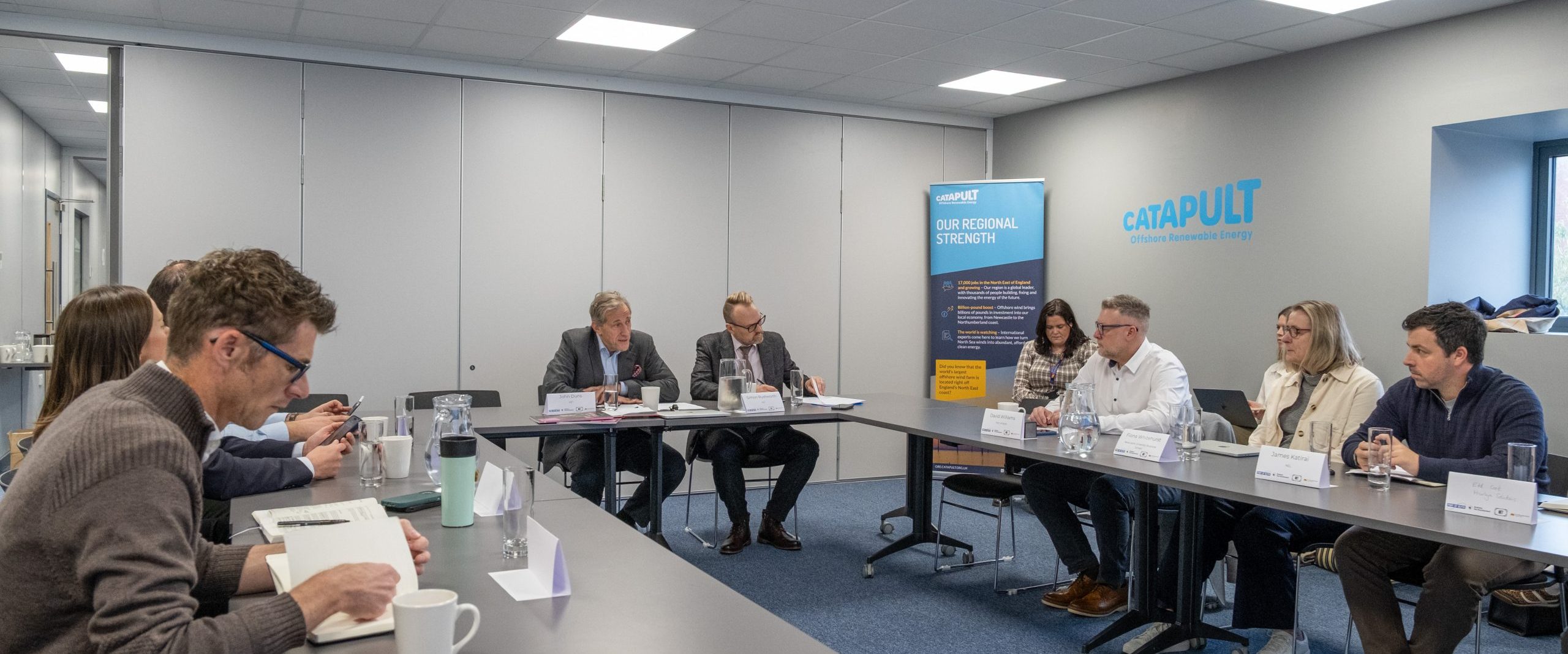
Across South East Northumberland, talk of possible investment and potential opportunities has been replaced by boots on the ground and tangible growth. Whether it’s JDR’s £130 million cable factory becoming operational, the ongoing development of the QTS data centre in Cambois or the success of innovative businesses such as Osbit, there’s a real sense of momentum. Here, in an exclusive roundtable discussion, hosted by N magazine publisher NET alongside Business Northumberland and Port of Blyth, industry leaders discuss what’s driving that momentum and how to maintain it.

November 16, 2026
Words by Simon Rushworth
Photography by Kate Buckingham (The Bigger Picture Agency)
We’ve seen considerable investment in South East Northumberland during the last 12 months. How much of that investment is translating into real business opportunities, and how much progress is being made?
There’s a real buzz about Blyth right now. Ashington’s advancing – and fast.
Cramlington’s a community empowered.
The next boom town? Put your money on Bedlington.
The evidence is compelling: South East Northumberland is an area rich in ambition and ready to realise its potential as a UK powerhouse for offshore energy, advanced manufacturing, data hosting and more.
From an emerging workforce determined to fill a longstanding skills gap to senior leaders looking to harness decades of experience, there’s a collective ambition to strike while the iron’s hot and capitalise on a sustained period of growth and optimism.
It’s essential, however, that the investment and momentum at the heart of South East Northumberland’s resurgence translates into lasting economic benefit underpinned by a robust, long-term vision.
Sarah McMillan, Northumberland County Council’s director of economic development and growth, told fellow roundtable members:
“Earlier this year, we launched the Northumberland economic strategy.
“Six months’ work went into interrogating the evidence base and the data that sits behind it.
“We’re in a strong position to help our businesses seize various opportunities, and we’ve set out a compelling vision for the county and its economic growth during the next ten years.”
There is no doubt QTS’ £10 billion data centre development in Cambois, near Blyth, has given Sarah and her colleagues the confidence to build a bold strategy rooted in evidence-based expectation.
However, the people of South East Northumberland were left disappointed by the failed Britishvolt battery start-up and there is understandably a keen focus on the progress of its much-vaunted successor.
Sarah said: “We’re looking at the single biggest investment in UK history with QTS’ £10 billion data centre.
“There are a few hundred people on the site already, and we know about 80 per cent of those people are local.
“We’ve already seen an impact and that’s only going to ramp up in the coming months and years.
“Significantly, QTS has agreed to support supply chain businesses and employment around a 25-mile radius of the site.”
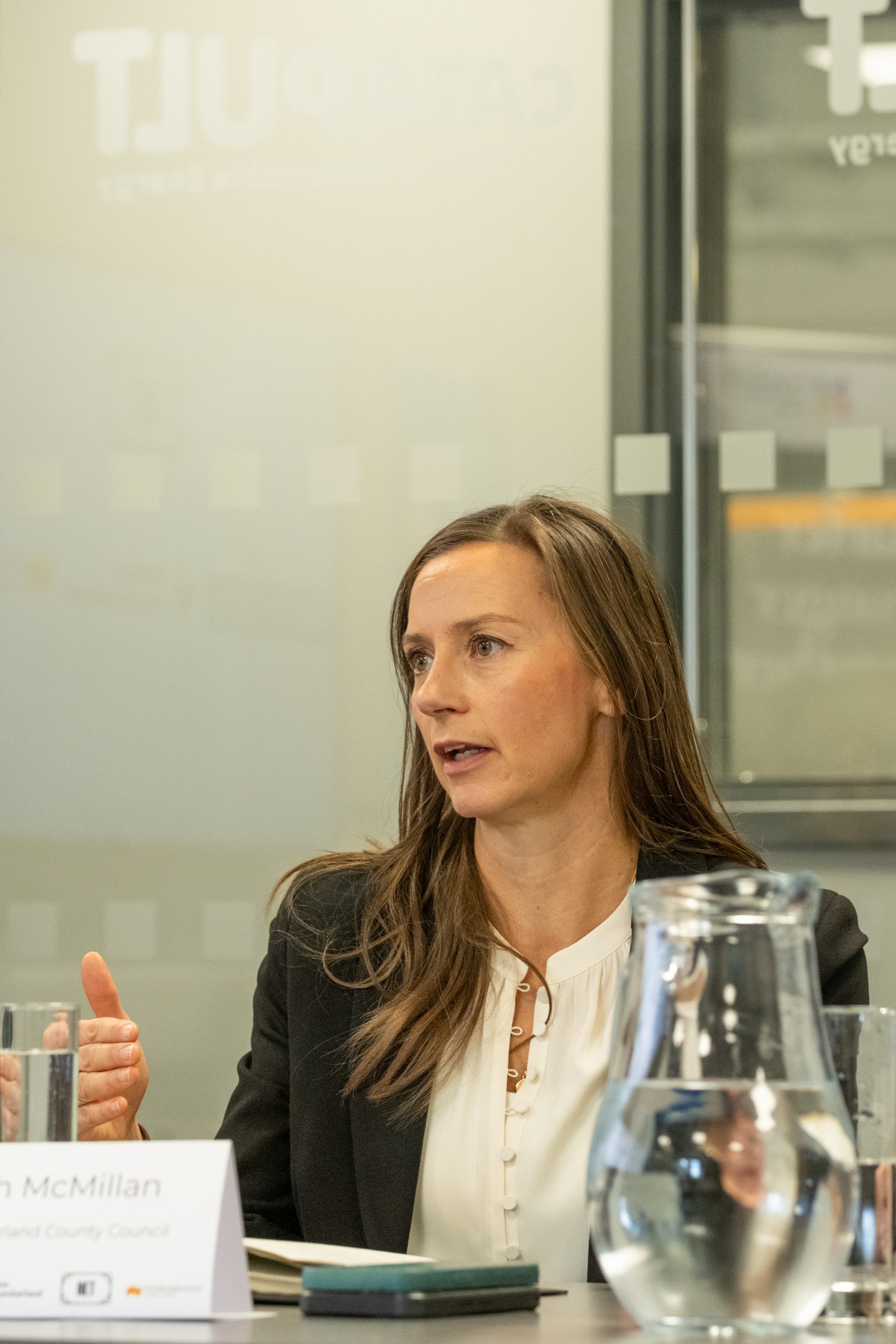
“We’re in a strong position to help our businesses seize various opportunities, and we’ve set out a compelling vision for the county and its economic growth during the next ten years”
Sarah McMillan, Director of economic development and growth, Northumberland County Council
But if data is the future, then what is powering the present?
Port of Blyth long since established itself as a driving force for investment and innovation, encouraging the sector-leading delivery of offshore energy, subsea engineering and renewable power.
Its appointment as the operator of the new Cambois Dock at Northumberland Energy Park and its proposed Battleship Wharf expansion are driving a growing sense of confidence.
David Williams, the port’s commercial manager, said: “We’ve been celebrating our 25-year association with offshore wind this year, but we want to stay ahead of the curve for the next 25 years.
“We’re looking at a £200 million investment across all three of our terminals, to improve access and deepen the river, so that we’re able to handle and facilitate larger cargos and larger vessels.
“We’ve already been in touch with developers following the AR7 (The Government’s Contracts for Difference Allocation Round 7) announcement and the decision to invest £100 million in the Battleship Wharf terminal.
“Talks are happening now with companies keen to support the construction phase. “We want to improve the port and its facilities, attract new businesses, help existing businesses within the port to expand and be ready for the work we know is on its way.”
Just as their contribution to QTS’ success will be vital, South East Northumberland’s buoyant SME community will be expected to carry the bulk of the supply chain load as Port of Blyth presses ahead with its multi-terminal expansion programme.
James Katirai, head of investments at Team Valley-headquartered NEL Fund Managers, insisted the advice, support and – crucially – cash is there to bolster that pivotal strand of the region’s upward trajectory.
He said: “Working capital is always an issue for SMEs.
“Ultimately, if they want to do more, they’re going to need more cash to deliver it.
“We’ve all seen the figures that show business start-ups in the North East aren’t as high as we’d like them to be, but I see the investment by QTS and the expansion at Port of Blyth as real game-changers for Northumberland.”
The county council has ring-fenced £110 million 59 for business development as part of its newly-launched Northumberland Growth Fund.
And the Commercial Property Investment Fund and £20 million Business Northumberland Investment Fund are primed to supercharge ambition.
Sarah said: “There’s a significant level of responsibility attached to that level of funding.
“We’ll be working closely with other fund managers – including NEL, the North East Fund and others – to get the best outcome for our businesses.
“There’s no wrong front door here.
“There is a lot of cross referral and collaborative work to ensure our businesses get the right support in the right place.”
David said South East Northumberland’s collaborative approach to business development is a core strength.
He added: “James touched on it from a business plan perspective, but from a market perspective the collaboration in the area is so impressive.”
Newcastle University has long been recognised as a catalyst for growth across the North East and its influence and impact on South East Northumberland’s future workforce remains critical.
Professor Fiona Whitehurst, Newcastle University Business School associate dean for engagement and place, said: “One of the things I’m always passionate about is ensuring our students and graduates are aware of just how many opportunities there are available here.
“We have so much expertise within the university that can be applied to businesses in the region, and we spin out so many innovative start-ups too.
“The region’s five universities have joined forces with North East mayor Kim McGuinness to launch the Inspire Fund, managed by Northstar Ventures, to support university spinout businesses.
“Who knows which of those might land in South East Northumberland?”
This area is gaining increasing strength when it comes to offshore energy and advanced manufacturing technology, but how can we turn that into a sustainable competitive advantage for the future?
Osbit. Harlyn Solutions. JDR.
Just three of the names that readily roll off the tongue when pointing to South East Northumberland’s resurgence as a key player in the UK’s fast-evolving operations and manufacturing sector.
And there are many more.
Steve Binney, director at offshore wind engineering firm Osbit, which complements a Port of Blyth-based assembly and servicing site with headquarters in Riding Mill, near Hexham, said: “Apart from Aberdeen, I don’t think there’s a centre for excellence quite like Port of Blyth when it comes to bringing together the very best in offshore energy, manufacturing, logistics and technology.
“We’re a success story because of where we are and the people around us.
“Without the help we’ve had from the Business Growth Fund and Port of Blyth, we couldn’t have grown to such a scale and so quickly.”
Steve oversaw the development of Osbit’s Tailwind asset information software and drove the expansion of its Blyth-based hub, which opened in 2025 and is helping the firm lead the way across designing, building, upgrading and modifying subsea burial and trenching systems.
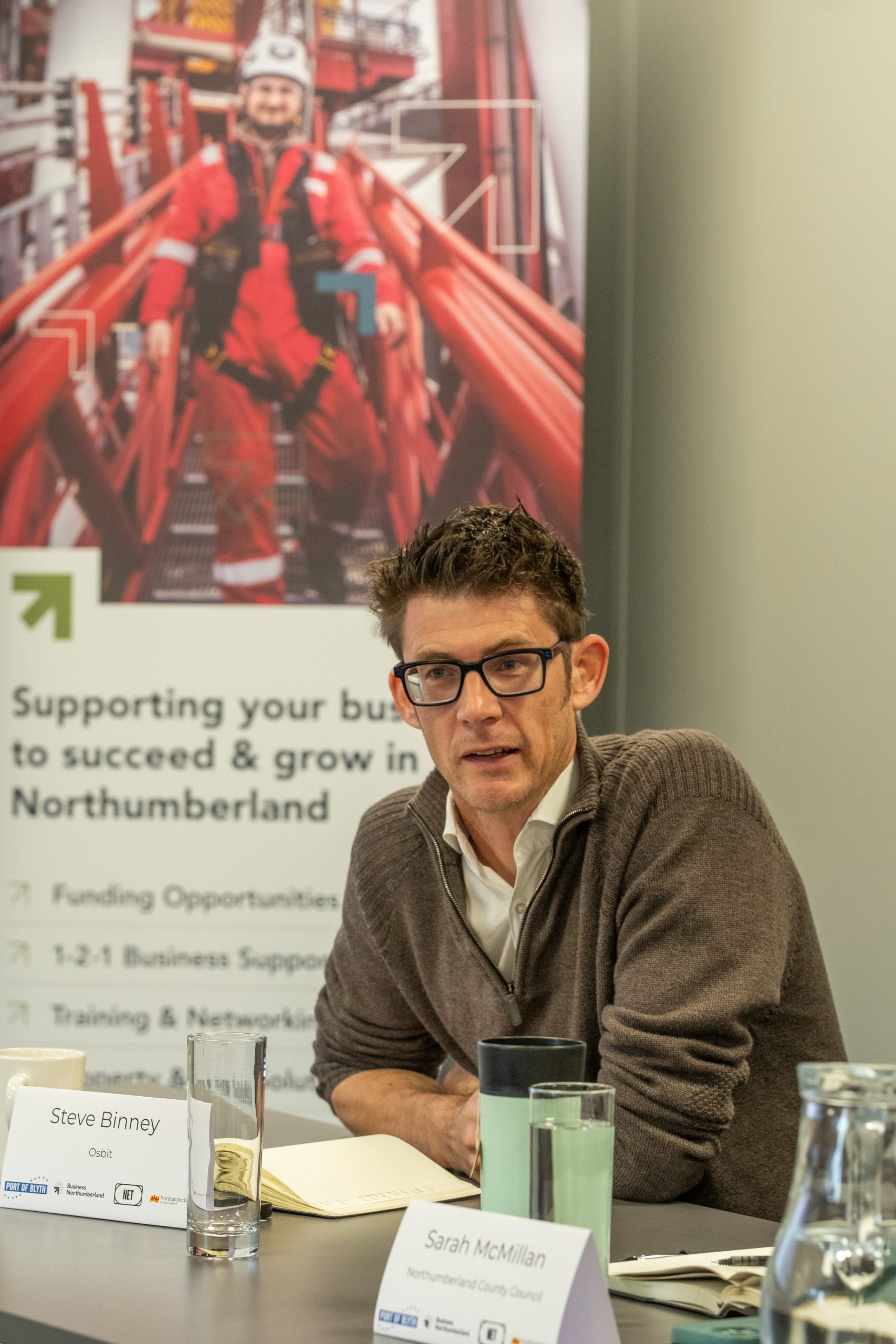
“Apart from Aberdeen, I don’t think there’s a centre for excellence quite like Port of Blyth when it comes to bringing together the very best in offshore energy, manufacturing, logistics and technology”
Steve Binney, director, Osbit
He added: “The power cables are getting bigger and they’re often bundled together. “So we’re developing a new wave of technology to support the creation of deeper trenches.
“Given the concerns around global security and power supply, the market is booming.” Like Osbit, Harlyn Solutions has made Blyth its home.
An innovative approach to engineering-led transport solutions has propelled the firm to the forefront of the conversation around moving complex and unique cargo from port to port across the world.
Edd Cook, Harlyn’s head of commercial, said: “Blyth has put us in the centre of this hub where there is a huge amount of opportunity. “Harlyn is based in Blyth for a number of reasons, but easy access to a strong local supply chain is key.
“We often work at short notice, with a quick turnaround and involving complex engineering solutions.
“To do that, we need people who we can trust and who are nearby.
“That’s something we have in South East Northumberland.
“Right now, our challenge is around ensuring Harlyn is more visible, so that more people understand our capabilities.”
David pointed to fabrication engineer Voe Marine as another Port of Blyth success story. He added: “Like Osbit and Harlyn, they’ve expanded within the port and we’ve been able to support their move from one terminal to another as they’ve grown.
“Our status as a trust port means we’re perfectly positioned to help businesses grow faster and ensure they maintain a competitive advantage.
“We’re not at the behest of any shareholders: everything made within the port is reinvested within the port; our stakeholders are our employees, our port users and the local community.
“What we offer here is unique.
“It’s long been recognised we are the UK’s premier cable handling hub.
“These days, nobody can offer the range of solutions we can in South East Roundtable Northumberland.”
For all the positivity in the room, though, Thomas Wildsmith added a note of caution.
The head of strategic business development at ORE Catapult, the Blyth-based offshore renewable energy innovation and research centre, believes South East Northumberland should play to its strengths and resist the urge to diversify too far, too fast.
He said: “It’s really important we don’t try to be everything to everyone.
“We’ve become known for work around the offshore wind sector.
“We should focus on the cabling and subsea engineering space, and Harlyn and Osbit do a fantastic job in ensuring we’re a big part of that conversation.
“Now JDR have come on board, we need to continue to grow that ecosystem.
“Looking ahead, I’m very interested in what can be done around the decommissioning of wind farms.
“That strikes me as a huge opportunity for the region.
“In the short term, we’ve launched Neowind, a North East-based offshore wind programme, which has huge potential.”
Funded by North East mayor Kim McGuinness and delivered by ORE Catapult, Thomas revealed Neowind aims to accelerate the development and demonstration of innovative offshore renewable energy technologies through a combination of research and development grant funding and specialist business support.
He added: “We’ve just closed applications for the first round of funding.
“We could have used the fund twice over, and it’s all match funded.”
We can attract all the investment in the world, but without the right people and access to finance, how much of the opportunity can we realistically capture?
On the surface, South East Northumberland – and its growing cluster of high-achieving businesses – is on an unprecedented upward curve.
But how deep is the pool of skilled workers required to sustain that relentless, necessary growth?
Richard Hogg, founder and chief executive at specialist STEM recruitment and HR support firm Jackson Hogg, said: “We’re having to pay a premium for talented people.
“As we move into the world of artificial intelligence, I see a massive demand for leads, seniors and principals.
“You can’t create those people overnight. “We have a skills gap when it comes to experienced executives, and we’re having to move people in from outside the area.
“For that to change in the longer term, we need to encourage more start-ups, support more SMEs and retain our best emerging talent.
“Right now, we need a significant inflow of people who have done bigger things outside the region.”
Steve added: “The real drought is when it comes to senior people to educate our entrylevel graduates on how the real world works.
“At the workshop stage, in particular, there’s a real generation gap.
“We’re finding it difficult to replace a whole bunch of amazing guys who are nearing retirement and who boast decades of knowhow.”
Sarah said the county council is working night and day to address a skills gap that clearly threatens to slow momentum and limit opportunity.
Central to that commitment is Blyth’s flagship Energy Central Campus.
Made up of two education, training and skills facilities, it focuses on STEM education, sectorled training, higher level skills, innovation, research and development to further support growth in the clean energy sector in Blyth and the wider North East.
She said: “The Energy Central Learning Hub is already helping people to re-skill. “It’s helping to close the skills gap but, of course, that won’t happen overnight, and we’re launching a new jobs platform that will match Roundtable supply to demand.”
James recognised the role NEL Fund Managers has to play in adding key learning to its investment opportunities.
He added: “How robust a business is depends upon its people.
“We’ve run a number of workshops with clients, intermediaries and business support agencies to try to upskill businesses and make sure they’re investment ready.”
Addressing the skills gap will only serve to further boost the businesses that have made Blyth their home, but how do we ensure economic progress is felt by the people and communities of South East Northumberland?
Fiona said aspiration would be key. She added: “We need to better understand what students want to do, and we need to give them examples to aspire to.
“At all levels of education, if businesses, however big or small, can just take a little bit of time and reach out into the community and the schools, it can make a significant difference.
“You don’t know what long-term connections you’re making there or who you might have inspired.”
Sarah said a robust economy continues to ignite a sense of aspiration across South East Northumberland, adding she expects the benefits of inward investment to be felt even more keenly within the next ten years.
She said: “What we’ve been able to do in Blyth has transformed how the town feels.
“There’s the Energy Central Learning Hub and the Market Pavilion cinema in the town square 62 62 – opposite that, the steels have already gone up on the new Energy Central Institute.
“We see the same evidence of progress in Ashington with the regeneration there. “The work that went into the railway station has created a bold gateway into the town and then there’s the new cinema under construction.
“Bedlington town centre is undergoing real transformation and the plans to revamp Cramlington’s Manor Walk are really exciting.
“All of that is visible, tangible change happening in tandem with sustained economic growth.”
Thomas added he was conscious of the role ORE Catapult will play in raising aspirations and broadening reach.
He said: “We’re working with the Institute of Chartered Ship Brokers.
“They’re looking to do an ‘introduction to shipping’ programme, which they want to get into schools across South East Northumberland.”
He added: “We want the people of Blyth and beyond to understand a port isn’t just about putting a line up onto a boat or driving a crane or a forklift truck.
“It can be.
“But we can have a greater impact on the wider community by showcasing all of the opportunities in and around the port.
“There are financial teams, operational teams, engineering teams and the supply chain.
November 16, 2026
- Events
- Feature