Five minutes with David Beattie: Rounton Coffee
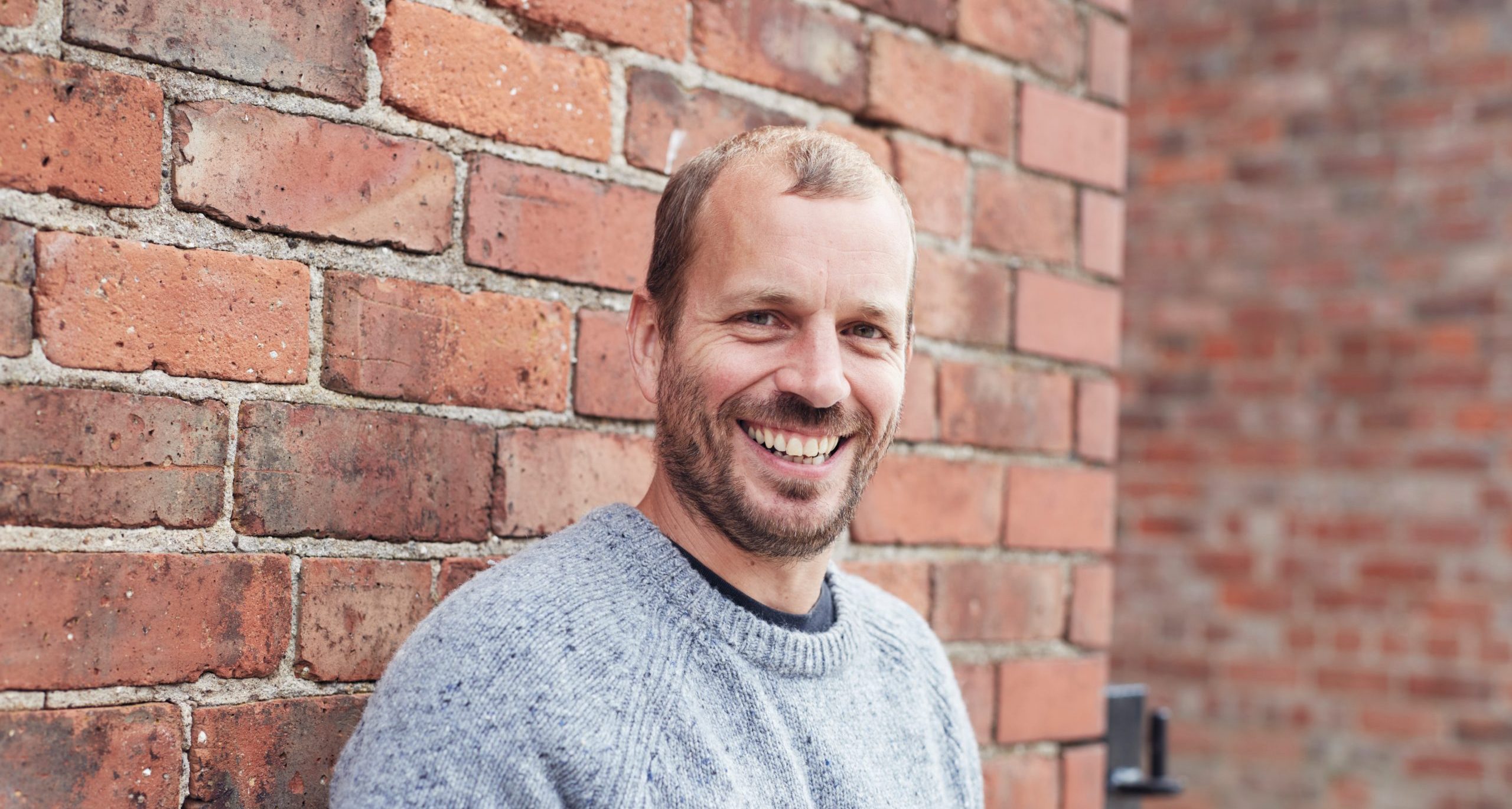
David Beattie is founder of Rounton Coffee, the roasting business operating out of a former granary in East Rounton, close to North Yorkshire’s border with Teesside. Here, he tells Steven Hugill about the trip that launched the business, swapping chemical engineering for finding the right coffee formula and the company’s commitment to improving communities and environments globally.
May 8, 2026
Rounton Coffee
www.rountoncoffee.co.uk
Instagram: rountoncoffeeroasters
Tell us a little about Rounton Coffee and its origins.
Rounton Coffee started in 2013 after I visited Sumatra.
The experience of seeing coffee grown and roasted really blew my mind.
Once I returned home, I wanted to carve out a career in coffee, so we started selling our roasted coffee on local farmers’ markets – at that point, we had little more than a desire to share great coffee with like-minded people.
Over time, we created a customer base that really appreciated what we were doing.
We moved into our East Rounton roastery and the business has grown to a level where we can look forward instead of looking backwards.
We now pack approximately 2000 bags of coffee each week, while our subscription service is attracting roughly 100 new customers each month.
The only investment we have ever made has been the energy to get this far.
And our core belief has never changed: sourcing responsibly, roasting with passion and keeping the relationships with suppliers as the beating heart of the business.
Coffee wasn’t your first career. How did you transition from chemical engineer to coffee roaster, and were there any crossover skills you were able to harness that made the shift easier?
I took a huge leap of faith into an industry I knew nothing about.
I had good intentions and a huge desire to succeed, but what I didn’t realise is how much my previous roles in the chemical industry had taught me.
Coffee roasting is a relatively simple process, using similar equipment and instrumentation that I was used to in the chemical sector, so that part of the process was relatively straightforward.
Working in highly structured environments quietly teaches you a lot – how to manage effectively, troubleshoot problems, navigate complex situations, drive progress and continuously improve.
That learning is what really shaped and motivated me.
Founding and growing a business is never without its challenges.
What were the biggest hurdles you had to overcome during the firm’s formative years, and how are you now navigating the growth barriers that come with a more established operation?
Like any business, we’re constantly navigating obstacles; there are some you can see coming and plan for, and there are others that emerge unexpectedly.
I tend to think about our journey in phases.
The first phase was very much about survival.
Tracy (Beattie-Lee – accounts and business mentor) and I had no other source of income, so making the business work wasn’t optional – it was essential.
We worked relentlessly to build something viable and sustainable – a business that could stand on its own.
That phase lasted around five years and laid the foundations for everything that has followed.
Today, the challenges are different.
I’m fortunate to have a strong team around me who understand what we’re trying to build and take real ownership of their roles.
Rather than having a single boss, I now see myself as being accountable to many — our customers, our suppliers and our team.
Navigating growth now is less about survival and more about balance.
The business’ progress was boosted recently by a £150,000 machinery investment, which has significantly increased roasting capacity. How is that helping lay foundations for the next stage of the company’s expansion?
When you remove inefficiencies, improve quality and build resilience, growth tends to follow naturally.
But that isn’t the primary driver.
That distinction matters to us, because we want the business to be sustainable and here for the long term, rather than chasing growth for its own sake.
That said, the investment in our coffee roaster has been genuinely transformative.
It has significantly improved consistency and quality, and has given us the capacity to operate with far more confidence.
Jamiel, our head of coffee, is now roasting up to a tonne of coffee per day, which, for a business that started on a farmers’ market, represents a huge step-change.
From a practical standpoint, it means we’re able to support areas of the business that are naturally growing, such as subscriptions, without putting strain on production or compromising standards.
Business is like whack-a-mole; you fix one issue, then another bottleneck is exposed.
But we see that as a healthy process; each improvement gives us clearer sight of where to focus next.
The business’ potential is borne out in numerous customer agreements, not least a partnership in the Outer Hebrides. What does that deal say about the brand’s appeal – and just how far can Rounton Coffee travel?
One of the great things about food and drink is that its appeal is inherently universal.
Securing a wholesale partner in the Outer Hebrides is a great example of how far word-of-mouth can travel when the product and service are right.
Our subscription customers are now spread right across Britain.
That said, our heart remains in the North East and North Yorkshire.
Those regions are still core to who we are and how we operate.
Ultimately, distance is never the deciding factor.
It is quality.
We’re not interested in becoming bigger at the expense of standards.
From backing the North York Moors Trust to engaging with youngsters from disadvantaged backgrounds across Teesside, community sits at the heart of the business. Why does supporting the local area and its people mean so much?
Our region has faced significant challenges over a long period of time, and hasn’t always been given the support it deserves.
That creates a responsibility – particularly for businesses – to contribute positively to the communities and environments they benefit from.
We believe that if you take from a place, whether through people, resources or infrastructure, you have a duty to give back.
For us, that means supporting projects both close to home and further afield, which we can see, feel and genuinely engage with.
That might look like planting an orchard at the Hole of Horcum, in the North York Moors National Park, or supporting a tree nursery in Uganda.
Ultimately, success for us isn’t just commercial; it is measured by the positive difference we can make to the places and people connected to the business.
What are your ambitions for Rounton Coffee over the coming years?
Our ambition is simple: to keep sourcing, roasting and selling great coffee, and to continue playing our small part in creating a better future for people and the planet.
What matters most to me is that Rounton Coffee continues to be a force for good.
We’re proud to be a 1% for the Planet member, but my ambition is to go beyond that and embed purpose into how we operate, rather than just how we donate.
If, in the years ahead, people think of us as a company that genuinely cares and acts on those values, I’ll consider that a real success.
May 8, 2026
- Feature
- Q&A