Five minutes with…Joseph Garcia
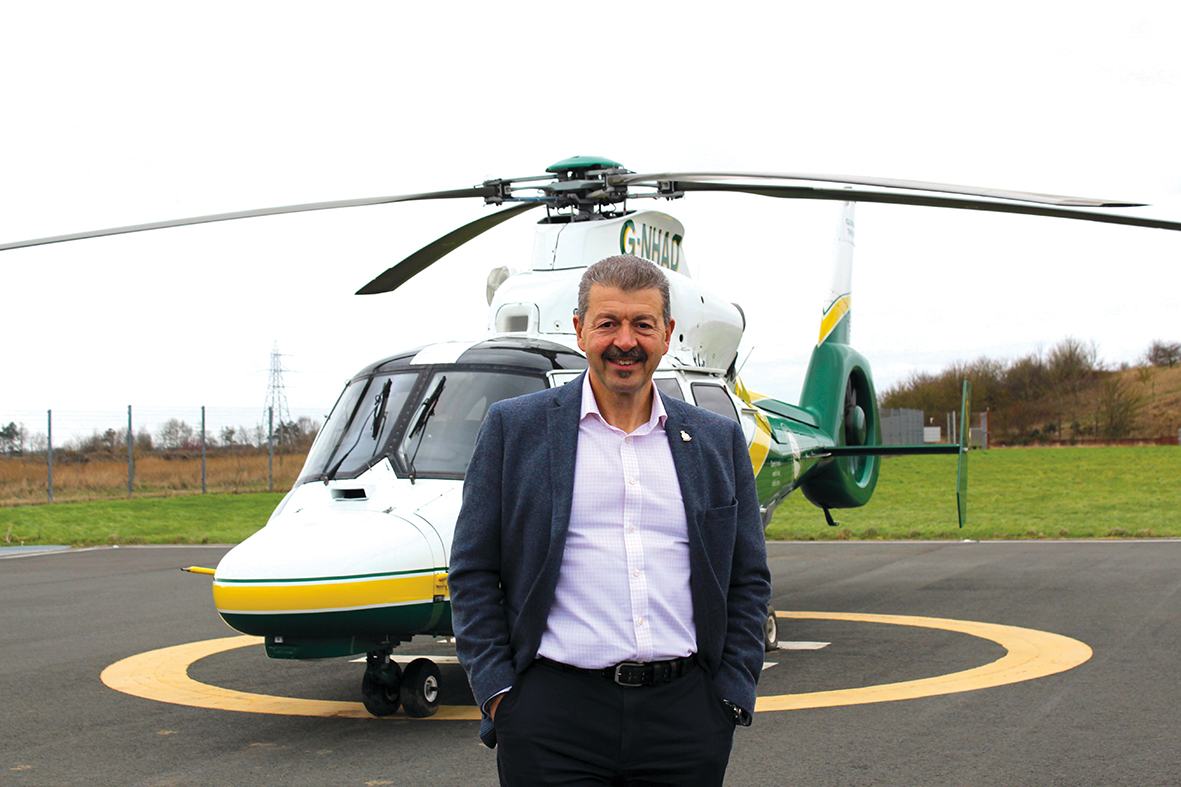
Joseph Garcia is chief executive of the Great North Air Ambulance Service, the helicopter emergency medical response organisation based at Urlay Nook, near Darlington. Here, he tells Steven Hugill more about the work of its intrepid team in often challenging environments, its Operation SOS campaign to fund new aircraft and the incredible value of public support on day-to-day operations.

January 19, 2026
www.greatnorthairambulance.co.uk
LinkedIn: Great North Air Ambulance Service
Tell us a little about the Great North Air Ambulance Service and its overarching mission.
At its heart, the Great North Air Ambulance Service (GNAAS) exists to bring hospital-level critical care to people who desperately need it, wherever they are.
We cover vast rural landscapes, major cities and everything in between, responding to some of the North’s most serious medical and trauma emergencies.
Our mission is simple: to save lives and improve patient outcomes across the region.
But we can only do that because people choose to support us.
Every mission is powered by public and corporate generosity.
As you say, the charity’s response zone covers some of the most remote and rural landscapes in the UK.
What are the biggest challenges crews face when answering emergency calls – and how do they overcome them?
The geography can be brutal.
Incidents often happen miles from the nearest road, in poor weather, across difficult terrain or in fading light.
Our helicopter gets us close, but sometimes crews still have to hike, climb or work with mountain rescue and coastguard teams to reach a patient.
It’s demanding work, but our teams excel in these environments through outstanding training and experience.
Supporting us means helping to keep people safe in the landscapes we all love.
Such operations are not cheap to deliver.
To that end, the charity launched Operation SOS: Secure Our Service late last year to raise £2.5 million for a third helicopter.
How vital will that be to the charity’s future?
Operation SOS is essential to our resilience.
A third helicopter gives us the ability to maintain full coverage when one aircraft is undergoing extended engineering work, and it builds the capacity we need to respond to growing demand, particularly in tourist hotspots where visitor numbers continue to rise.
Most importantly, it means more lives saved.
Supporting Operation SOS is one of the most direct ways to help secure our future.
The emergency medical response world continues to evolve quickly.
How is innovation transforming how the charity delivers services?
Innovation is central to our future.
We’re moving towards a modern Airbus H145 fleet, which offers improved safety, efficiency and capability, and we’re delivering advanced clinical interventions that were once only possible in a hospital environment.
We will also be exploring tools like night vision imaging systems, when we become operational with our replacement aircraft, to enhance safety in low-light conditions.
And behind each of these innovations is public support.
When people donate, sponsor or partner with us, they’re not just keeping helicopters flying, they’re funding the next generation of life-saving care.
You’ve spent more than 35 years working in and around the NHS and ambulance sector.
How are you bringing that experience to benefit the Great North Air Ambulance Service?
My experience across multiple ambulance trusts has shown me the power of great leadership, strong clinical governance and sustainable long-term planning.
At the Great North Air Ambulance Service, I’m applying that to strengthen our partnership with the NHS system, in particular the ambulance services, to deepen our clinical excellence and build a secure financial and aviation future, ensuring we are a trusted partner to the NHS across the North.
The public places enormous trust in us and their support is being used responsibly, strategically and with the patient at the centre of every decision.
Your teams operate in highly pressured, life-or-death situations.
How do you protect staff wellbeing and build resilience?
Our crews see things that most people never will, and they carry that responsibility with incredible professionalism and compassion.
But the emotional toll is real.
We’ve invested in wellbeing programmes such as peer-led support in trauma risk management, reflective practice, confidential peer support with mental first aiders and access to psychological services.
We’re also honest with each other: we check in, we talk openly and we create space for decompression after difficult jobs.
Culture matters.
A supportive, connected, psychologically safe and compassionate team is the strongest protection against burnout.
My leadership team and I are absolutely committed to prioritising wellbeing just as much as operational excellence.
This resilience is only possible because we’re a connected and supportive organisation.
Community backing plays a huge role too.
Every message of thanks, every fundraiser and every donation genuinely lifts morale.
What are your ambitions for the Great North Air Ambulance Service over the coming years?
Our ambition is to secure a genuinely sustainable, world-leading helicopter emergency medical service for the North – one that is financially resilient, clinically outstanding and operationally ready for the challenges of the next decade.
That means completing our move to a modern fleet, expanding our training and education capability, and building deeper partnerships with industry and the NHS.
It also means growing the fundraising base that makes all of this possible.
Ultimately, I want every person in our region – resident, visitor or worker – to know that if the worst happens, the very best care in the country will come to them.
That’s the standard we hold ourselves to every single day.
And everyone can play a part in that journey.
Whether through supporting Operation SOS, volunteering or simply learning more about what we do, every contribution strengthens the service that thousands of people may one day rely on.
January 19, 2026
- Interview