Crowd Threat: Mapping the future of intelligence
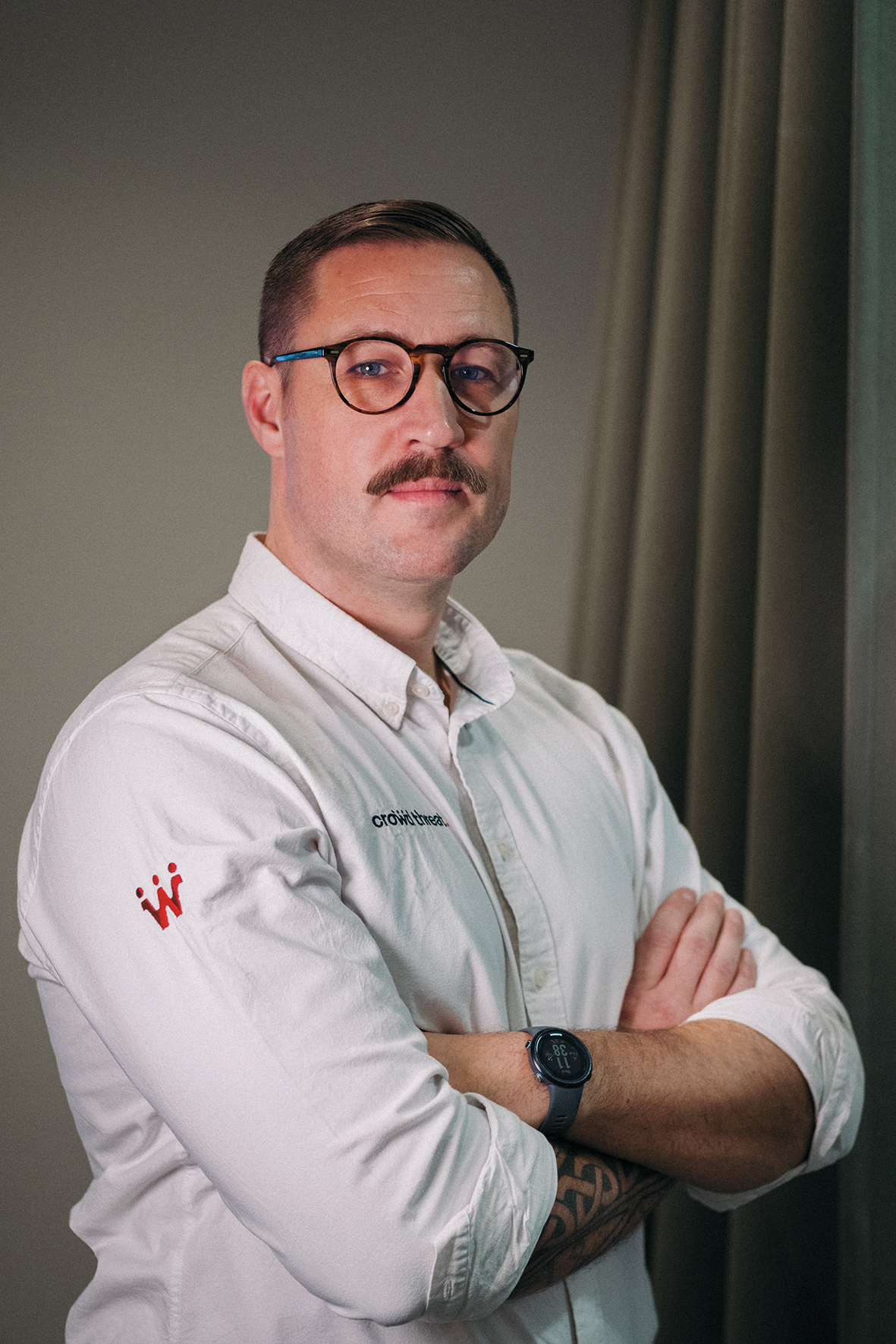
Built on decades of intelligence experience and shaped through close collaboration, Crowd Threat is an ambitious attempt to change how global risk is understood. Created by former military intelligence operator Michael McCabe and brought to life with the support of technology company Wubbleyou, the platform challenges traditional intelligence models by decentralising how threats are identified. Here, Michael and Wubbleyou managing director Mark Renney speak to Peter Anderson about the thinking behind Crowd Threat, its scalability and the partnership that brought it to life.

January 18, 2026
Napoleon Bonaparte once observed that “war is 90 per cent information”.
Regarded as one of history’s greatest military strategists, the French emperor built his reputation on speed, foresight and an exceptional grasp of local intelligence, using information to outmanoeuvre opponents long before battles were decided in the field.
Yet, ironically, it was also the fragility of intelligence that proved his undoing at Waterloo, where flawed assumptions and delayed reports proved as decisive as Wellington’s forces.
It is a lesson well understood by Michael McCabe.
A former military intelligence operator turned technology founder, Michael has spent his career grappling with the consequences of incomplete, delayed or biased information – from operational deployments to building Durham-based Intelligence Fusion, which he grew into a global threat intelligence platform before its acquisition by Sigma7 in 2022.
That experience now underpins the creation of Crowd Threat, which seeks to rethink how global situational awareness is built in an increasingly complex world.
With the help of Newcastle-based technology company Wubbleyou and its managing director Mark Renney, Michael has translated that vision into a live, crowd-powered platform that combines real-time reporting from local contributors around the world.
Put simply, Crowd Threat has been designed to be something far more ambitious than a traditional threat intelligence tool.
Michael says: “An obvious problem in threat intelligence is that the world is a very big place.
“Everyone knows about the major events because they’re on the news, but what gets missed are the thousands of local and emerging threats that never make the headlines.
“Much of today’s intelligence is produced by small, centralised teams, often based in the West, attempting to monitor an increasingly complex and fast-moving world.
“You’ve got analysts sat thousands of miles away trying to interpret what’s happening, often without the language, the culture or the local context – and that creates gaps.”
Crowd Threat has been built to fill those spaces.
The platform provides a real-time global map of incidents, powered by a network of contributors who report what they see as it happens.
Michael says: “The idea is simple.
“You give local people an easy way to report threats, you verify that information, and you reward speed and accuracy, with people paid for each threat reported.
Crowd Threat’s origins can be traced back to Michael’s time serving with the British Army and work in the private security sector during deployments in Iraq, where he was responsible for gathering, analysing and disseminating intelligence in complex and fast-moving environments.
He says: “We were reading local media, talking to Iraqis and sharing information in informal Skype chats.
“And I remember thinking, ‘why isn’t something like this global?’
“Why can’t you tap into a network of people around the world and make sense of events as they unfolded, in real time?”
Contributors are guided through an onboarding and training process, supported by artificial intelligence-assisted tools that help structure reports and categorise incidents, before each submission is verified by human analysts.
Michael adds: “Small, centralised teams just can’t scale to the volume of threats that exist globally.
“But a trusted crowd can – and it brings cultural fluency that analyst-only models miss.
“If you want to understand events properly, you need insight from those who live it every day.
“That’s how you capture nuance, context and early signals.”
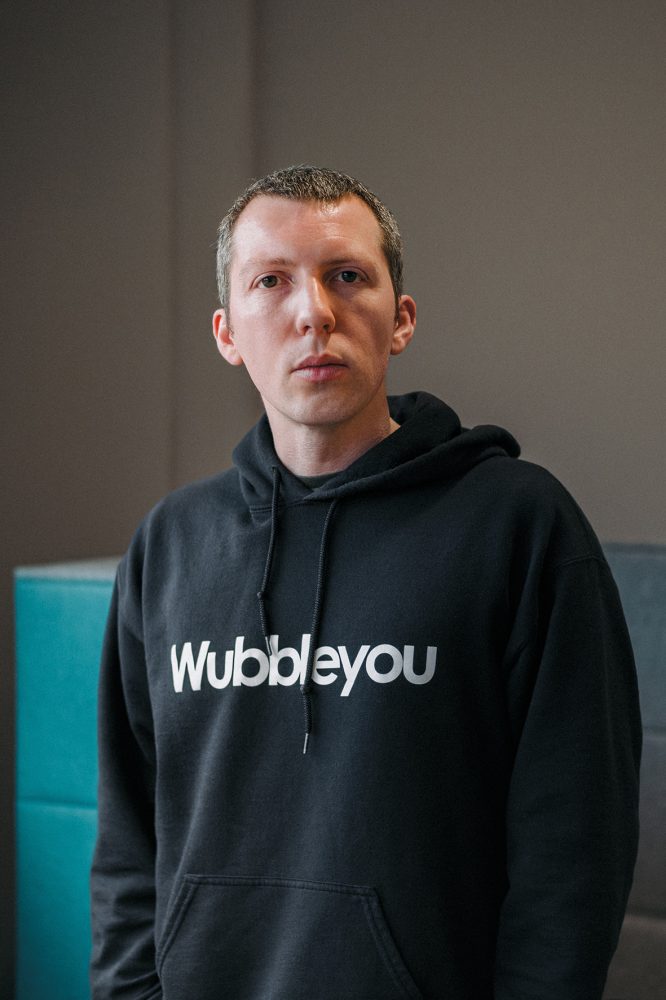
For Mark, pictured below, that clarity of purpose was key to the involvement of Northumbria University spin-out Wubbleyou, which specialises in building custom technology products, artificial intelligence solutions and digital platforms for scaling businesses and public sector organisations.
He says: “What excited us was how clearly Michael articulated the problem.
“This wasn’t about building another dashboard, it was about translating deep expertise into a product that people actually want to use.”
And while Crowd Threat is still very much in its nascent stages, having only launched in November, its longer-term potential lies in the way it has been designed to scale.
The platform has already attracted a growing number of contributors submitting hundreds of verified threats, providing early evidence the model can sustain volume and quality.
And rather than relying on ever-expanding analyst teams, Crowd Threat is designed to grow organically.
Michael says: “We don’t have to increase the verification team in line with the size of the crowd.
“You build trust over time, you introduce different levels of checking and you let the system scale naturally while maintaining quality.”
Crucially, the platform is also being developed to be far more than a visual map of incidents.
Over time, the data it generates will be used by organisations as a live input into their own decision-making, whether for security planning, risk management or operational forecasting.
And as the platform grows, its value compounds.
More contributors mean broader coverage, faster reporting and richer data, creating a living, constantly updating picture of global risk.
For Michael, that scale unlocks something far bigger than situational awareness alone.
He says: “Once you have that data at scale, you can start to see patterns, trends and make predictions.
“That’s when it becomes transformational.”
For Mark, a critical element in Wubbleyou’s involvement was the opportunity to support a North East business with genuine global disruptive potential.
Having met at PLATFORM – the monthly Wubbleyou-sponsored event for ambitious North East business owners – the pair quickly discovered a shared outlook.
For Wubbleyou, it meant working alongside Michael as a partner, rather than a supplier, shaping product strategy, user experience, technical architecture and providing challenge and restraint where needed.
Mark says: “We’re good at creating the right kind of tension.
“There’s always more you could build, but we focus on the 20 per cent that delivers 80 per cent of the value.
“You test that first, learn from it and then decide what’s worth building next.”
As a non-technical founder, Michael says the guidance has proved invaluable.
He says: “I know what I want to achieve with technology, but I don’t pretend to know the best way to do it.
“Mark and his team helped ground the vision, making sure we built something that worked and that people would actually use, and that we could prove before scaling.”
Their partnership is also firmly shaped by place.
Both see Crowd Threat as an example of what can emerge from the North East – a region rich in technical talent and boasting a collaborative business culture, but one that is often too modest about its achievements.
A Northumbria University alumnus, Mark has grown Wubbleyou since 2009 and has become a vocal advocate for developing regional tech capability.
He says: “We don’t shout loudly enough about what’s happening here.
“But if we want better jobs and to keep talented people in the region, we need more companies like this.”
Michael adds: “I could build this anywhere.
“But this is home, and there’s no reason you can’t build something with real scale and ambition in the North East.”
Wubbleyou
LinkedIn: Wubbleyou
Crowd Threat
LinkedIn: Crowd Threat
January 18, 2026
- Promoted