On track for the future: Nexus
Behind every journey on the Tyne and Wear Metro is a workforce trained to operate in a complex, highly regulated environment. At Nexus, developing that workforce means more than just training for today – it’s about planning ahead and building a strong pipeline of talent. Here, Maureen Askew, head of learning at the transport provider, speaks to Peter Anderson about training, apprenticeships and developing a workforce fit for the future.

May 8, 2026
Nexus
www.nexus.org.uk
LinkedIn: Nexus
Pictures: Andrew Lowe
When Queen Elizabeth II officially opened the Tyne and Wear Metro in 1981, it marked what was described at the time as a “rapid transport system revolution” for Tyneside.
More than four decades on and that prediction has undoubtedly held true.
Operated by Nexus, the transport provider for Tyne and Wear, the system has grown from its original 44 stations to 60, now carrying around 35 to 40 million passengers a year – the equivalent of more than 100,000 journeys every day.
With the rollout of the new electric Class 555 trains replacing the original ageing Class 599 Metrocars, alongside major infrastructure projects such as the £24 million North Shields ferry landing, Nexus is at the forefront of delivering North East mayor Kim McGuinness’ ambition to build a “world-class public transport network” for the region.
Behind that operation is a workforce of around 1200 people, spanning drivers, engineers and frontline customer service staff, to name just a few roles.
Maintaining that level of service – safely, efficiently and in line with evolving regulation – requires continuous training, development and careful planning.
At the heart of that effort is the £8.4 million Nexus Learning Centre in South Shields.
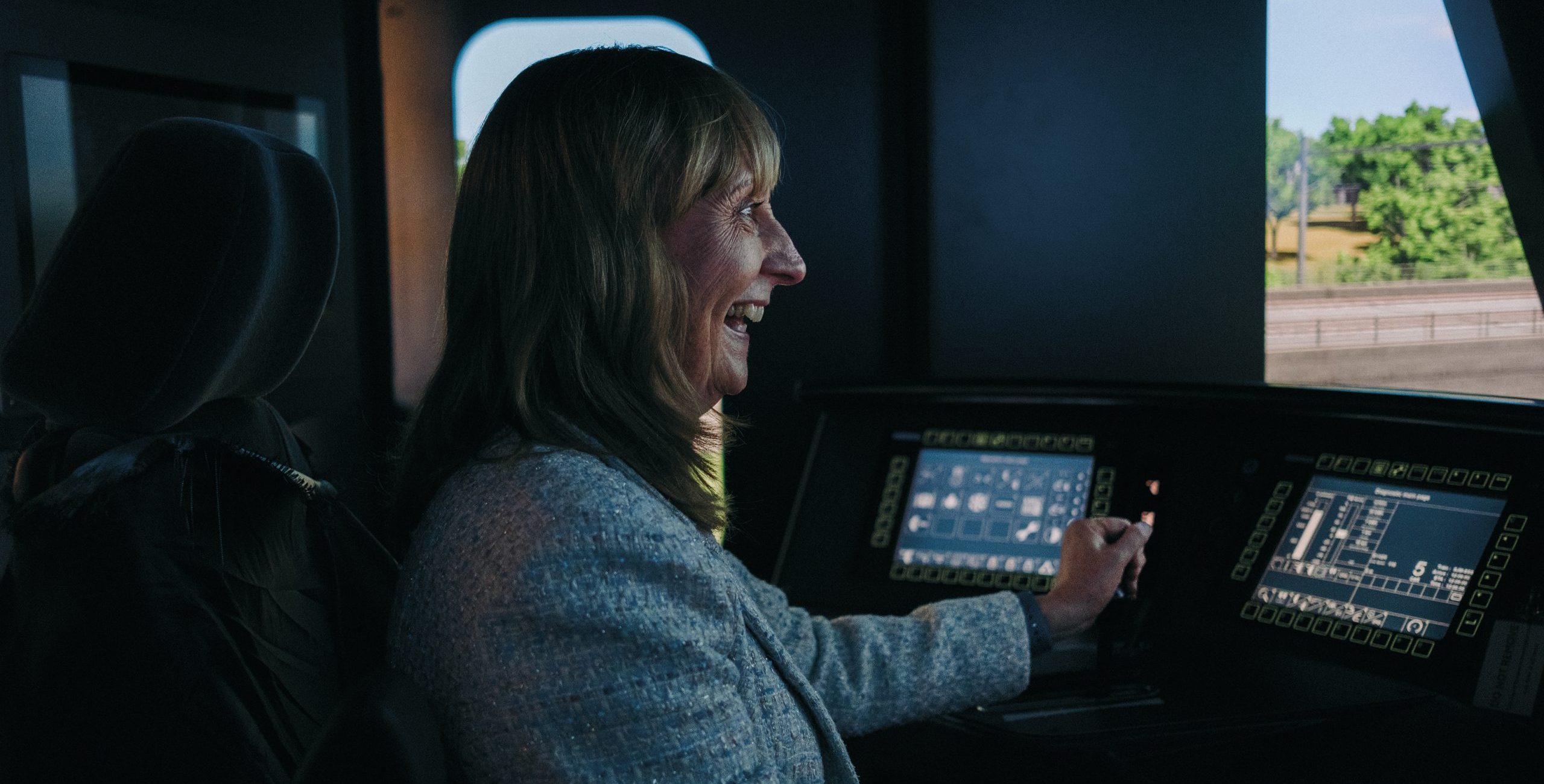
Designed to replicate real-world conditions, it comes complete with a mock Metro station, platform infrastructure, 70-metre training track and driver simulator, where employees at every stage of their careers are equipped with skills to support the current system and its future growth.
For Maureen Askew, Nexus’ head of learning, the centre is as much about building confidence as it is competence.
She says: “This has given us the ability to train people in an environment that feels real, but without the pressure of being out on the live system.
“You can make mistakes, you can learn and you can build confidence before you are in a situation where it really matters.”
That real-world approach is embedded across the site, where more than 500 courses cover engineering, infrastructure, operations and customer service.
A key focus in recent months has been driver conversion training, particularly as Nexus introduced its new fleet of electric trains.
Maureen says: “All of our existing drivers have undergone conversion training, which has been a huge programme in itself.
“The simulator has been a big part of that; it gives drivers a highly realistic experience of the new trains before they’re out on the rail network.”
Alongside retraining existing staff, Nexus is also building capacity for the future, with a new cohort of drivers – including 16 additional recruits – currently progressing through the recruitment programme, with training planned to commence in May 2026.
Training, however, does not stop once someone is qualified.
Maureen says: “People don’t come to the Learning Centre once.
“They come back for refresher training, re-certification and to keep up with changes, because the industry doesn’t stand still.”
From frontline customer service advisors to highly specialised engineering teams, the centre plays a key role in ensuring staff are not only trained, but fully prepared to operate safely and effectively across a complex, regulated transport system.
Maureen adds: “It’s about making sure people are ready and confident in what they’re doing every day.
“And that consistency is critical, because the standards we’re working to are so high.”
While the Learning Centre supports today’s workforce, apprenticeships are building what comes next.
And for Maureen, that starts with a clear philosophy.
She says: “We call it ‘grow your own’.
“We’ve got people who have been with Nexus for a long time across a range of roles, and we’re starting to see that natural turnover.
“We can’t wait until those gaps appear – we have to plan ahead.”
That long-term approach underpins Nexus’ apprenticeship programme, which is broad and carefully targeted, and covers areas such as engineering, HR, marketing and project management, while adapting each year to reflect the organisation’s evolving needs.
It is also closely tied to how Nexus uses its apprenticeship levy, ensuring funding is invested strategically to bring new talent into the organisation while supporting the development of existing employees.
Maureen says: “We’re always looking at the projects coming up, the skills we need and where the risks are.
“That shapes the programme each year.”
The philosophy has included a renewed focus on engineering to support future demand, particularly a major signalling upgrade that will modernise how train movements are controlled across the network.
Maureen adds: “These roles take years to develop.
“You’re looking at four-year programmes in some cases, so you’ve got to forecast what you’re going to need and start building that pipeline early.”
In total, Nexus has 27 live apprentices, with a further cohort due to start later this year, selected from around 500 applicants through a rigorous process.
For Maureen, though, technical ability is only part of the equation.
She says: “You can teach someone the skills, but what you’re really looking for is how they approach things – their attitude, their willingness to learn and how they work with others.”
Structured work experience placements are also helping to build awareness earlier, giving young people hands-on insight into careers at Nexus.
Maureen adds: “It’s about opening people’s eyes to opportunities.
“For many, it’s their first real experience of the workplace, and that can be the start of their journey with us.
“It helps them see the careers that are right on their doorstep, and what they could be part of.”
Nexus has a strong track record for developing apprentices through the organisation and wider industry.
Stuart Clarke began his career at Nexus in the late 1990s as an electrical apprentice, and now holds the role of infrastructure director, while Paul Patrick and Neil Blagburn went on to hold senior director roles at Stadler and on the Northumberland Line, respectively.
Taken together, the approach is clear: futureproofing at Nexus is as much about people as it is infrastructure.
By investing in skills and creating pathways for progression, the organisation is building a workforce ready to evolve alongside the network it supports.
Maureen adds: “We invest a lot in our people because they’re central to everything we do.
“It’s not just about bringing people in; it’s about supporting them, developing them and helping them build a future with us.
“That will sustain the organisation into the future.”
For more information about Nexus, its services and its training programmes, visit www.nexus.org.uk
May 8, 2026
- Promoted