Roundtable: Navigating the green energy transition
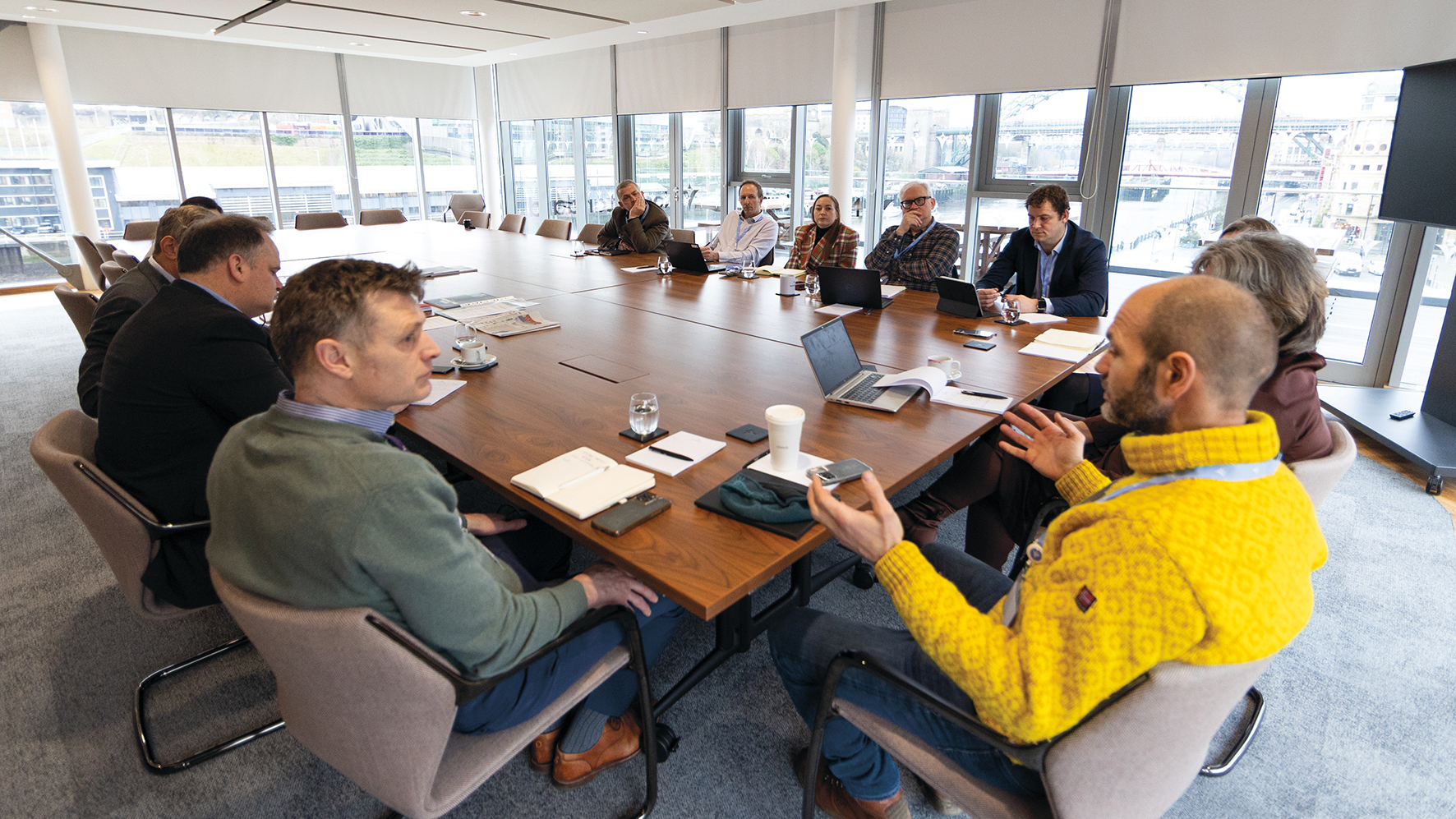
In 1866, while living in exile in Guernsey, the French romantic writer Victor Hugo captured the fierce resistance to the advent of steam power. In Toilers of the Sea, he wrote: “The savants rejected steamboats as impossible; the priests anathematised them as impious…Fulton was a new incarnation of Lucifer”. It would take much of the nineteenth century for steam to prove its worth, as doubts over reliability, cost and fuel supply lingered. Today, despite Government net-zero targets and policymakers heralding a green energy revolution, similar questions are being asked once again. Here, in the second of an exclusive roundtable series hosted by global marine insurer NorthStandard alongside N magazine publisher NET, regional leaders examine how the maritime sector is navigating the transition to greener energy.
March 14, 2026
What steps are being taken to enable a safe and commercially viable energy transition – and where can progress be made?
From the Offshore Renewable Energy Catapult in Blyth to the Tyne Clean Energy Park at Port of Tyne and Net Zero Teesside Power at Teesworks, the North East has pinned its colours firmly to the green energy mast.
Against that backdrop, roundtable members outlined the practical steps already being taken to support decarbonisation, as well as the action required to turn intent into delivery.
Kate Kwiatkowska, head of sustainability at Tyneside-headquartered NorthStandard – which provides protection and indemnity cover for one-in-five commercial ocean-going vessels across the globe – said efficiency gains across existing fleets can deliver immediate emission reductions.
She said: “Through initiatives like the Blue Visby Consortium, sailing at more efficient speeds and arriving just in time for berth availability can make a real difference.”
Thomas Wildsmith, head of commercial at the Offshore Renewable Energy Catapult, added: “If we can operate more reliably and plan maintenance more intelligently, we can significantly cut offshore hours, costs and emissions over the full life of a project.”
Brendan Hayward, joint managing director at offshore wind engineering firm Osbit, which last year opened a Port of Blyth base, highlighted how engineering design is already delivering tangible commercial and environmental gains.
He said: “The biggest impact we can have is through the equipment we design and deliver.
“In some cases, we’ve saved around 60 days of vessel time offshore on a single project, which has a huge effect on cost, risk and sustainability.”
Derek Christie, government affairs – Scotland and UK sites representative at Siemens Energy, added: “Customers are asking for reduced vessel time, shorter installation windows and safer operations.
“In offshore wind, particularly floating wind, we’re now seeing solutions that can fundamentally change how projects are delivered.”
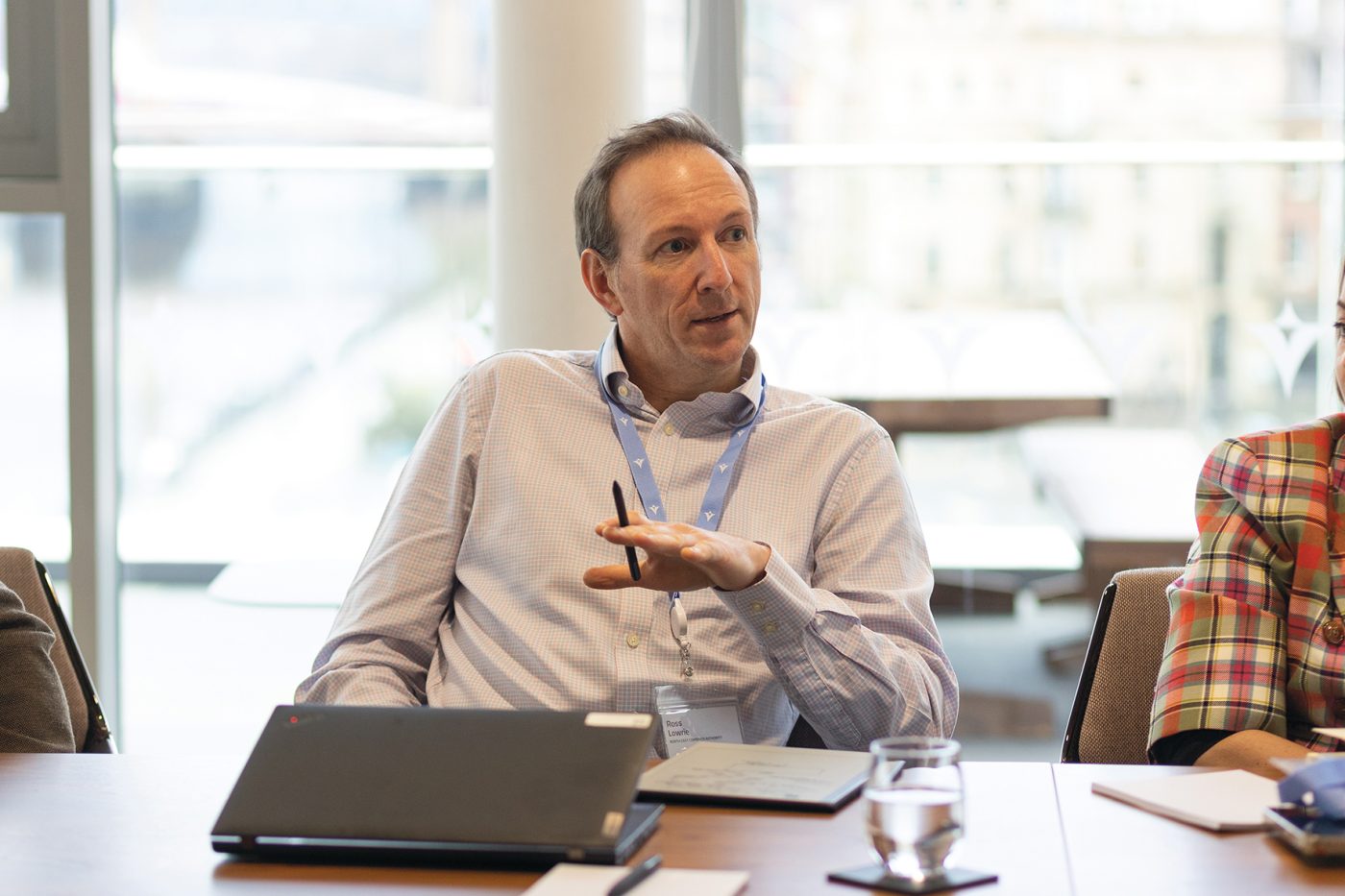
Ross Lowrie, head of clean energy and environment at the North East Combined Authority, said: “Success for the North East looks like busy ports, good jobs and vibrant industries – with around 25,000 new green jobs alongside the 25,000 that already exist.
“And those jobs won’t all be offshore wind technicians.
“A green job could be in manufacturing, logistics, fuels or professional services.”
Dr Sarah Green, chief executive at NewcastleGateshead Initiative, added: “The North East has the highest concentration of energy-related companies of any English region, so we start from a position of real strength.
“The task now is making sure that story cuts through nationally and internationally.”
What operational, regulatory and safety barriers are holding maritime decarbonisation back?
In 2015, when 195 parties, including the US and China, signed the landmark Paris Agreement, decarbonisation appeared an existential necessity.
A decade on, and concerns around cost, competitiveness and energy security – compounded by political volatility and global economic uncertainty – have begun to erode that consensus.
Helen Barden, director of external affairs at NorthStandard, said: “The industry knows it needs to decarbonise, but we still don’t have the right global framework in place to drive that transition.
“Without clear rules from the International Maritime Organization, it becomes very difficult for shipowners to make long-term investment decisions.”
Sophie Pollard, partner at international law firm Hill Dickinson, whose office portfolio includes a Newcastle base, highlighted the switch to alternative fuels.
She said: “Regulation gives shipowners, insurers and investors confidence over which fuels are likely to lead the transition.
“We need regions and governments to invest in infrastructure that allows these fuels to be used at scale.”
Ed Davies, chief strategy officer at NorthStandard, said: “Shipping has adapted before – from sail to coal to diesel – but at each of those points, the economics made sense and the supply was known.
“This time, the technology is still emerging, the supply chains aren’t established and the economics don’t yet drive the transition in the same way.”
Chris Kelsey, public affairs manager at the North East Chamber of Commerce, added: “The elephant in the room is that international shipping emissions don’t sit neatly on national net-zero balance sheets.
“Without that global alignment, it’s very difficult to justify the scale of investment needed in new vessels and fuel infrastructure.”
How do we build the financial and skills capacity needed to make the maritime energy transition commercially viable?
Momentum behind the region’s green energy ambitions was underscored just days before the roundtable, when the signing of the North East Ports Partnership was complemented by a £15 million announcement to deliver green energy training centres in Blyth and Wallsend.
Highlighting skills, Ross said: “We often focus on 16 to 18-year-olds, but we need to be talking to ten-year-olds because the people who will deliver this transition are still in school.”
Thomas said: “One of the biggest opportunities is understanding what roles we’ll need in five to ten years’ time, and working with education providers to build the right skills in the right places.”
Helen emphasised the need to better align risk, finance and insurance with the realities of maritime decarbonisation.
She said: “These new fuels present new risks, and without the right global liability framework in place, it becomes very difficult to price that risk in a way that is commercial and competitive.”
Sophie pointed to wider challenges around perception.
She added: “If we were better at extolling the virtues of working across the maritime sector, we’d attract more people and see greater confidence and investment.”
What will success look like for the North East by 2030 and 2040?
Kate said: “It’s about having the port infrastructure in place to open up green corridors and seeing net-zero vessels calling in the North East.”
Chris said: “Success is the North East leading the charge in greener maritime, with the region known internationally for clean, sustainable energy, rather than just traditional offshore activity.”
Sarah added: “I want businesses here that have sufficient gravitas to attract talent from anywhere in the world, with the pull and magnetism to inspire real pride in what the region is achieving.”
This is an abridged version of the full roundtable discussion, which you can read by visiting N magazine’s sister publication Bdaily here.
March 14, 2026
- Events