Taken for granted
Grant giving has been a focal point of Muckle LLP’s corporate giving strategy for years. But the firm is committed to doing even more to help its local communities. Here, to coincide with B Corp Month, the B Corp-certified law firm tells N magazine about its approach and how thinking a little more strategically can make an even greater impact.

March 16, 2026
Muckle LLP
www.muckle-llp.com
LinkedIn: Muckle LLP
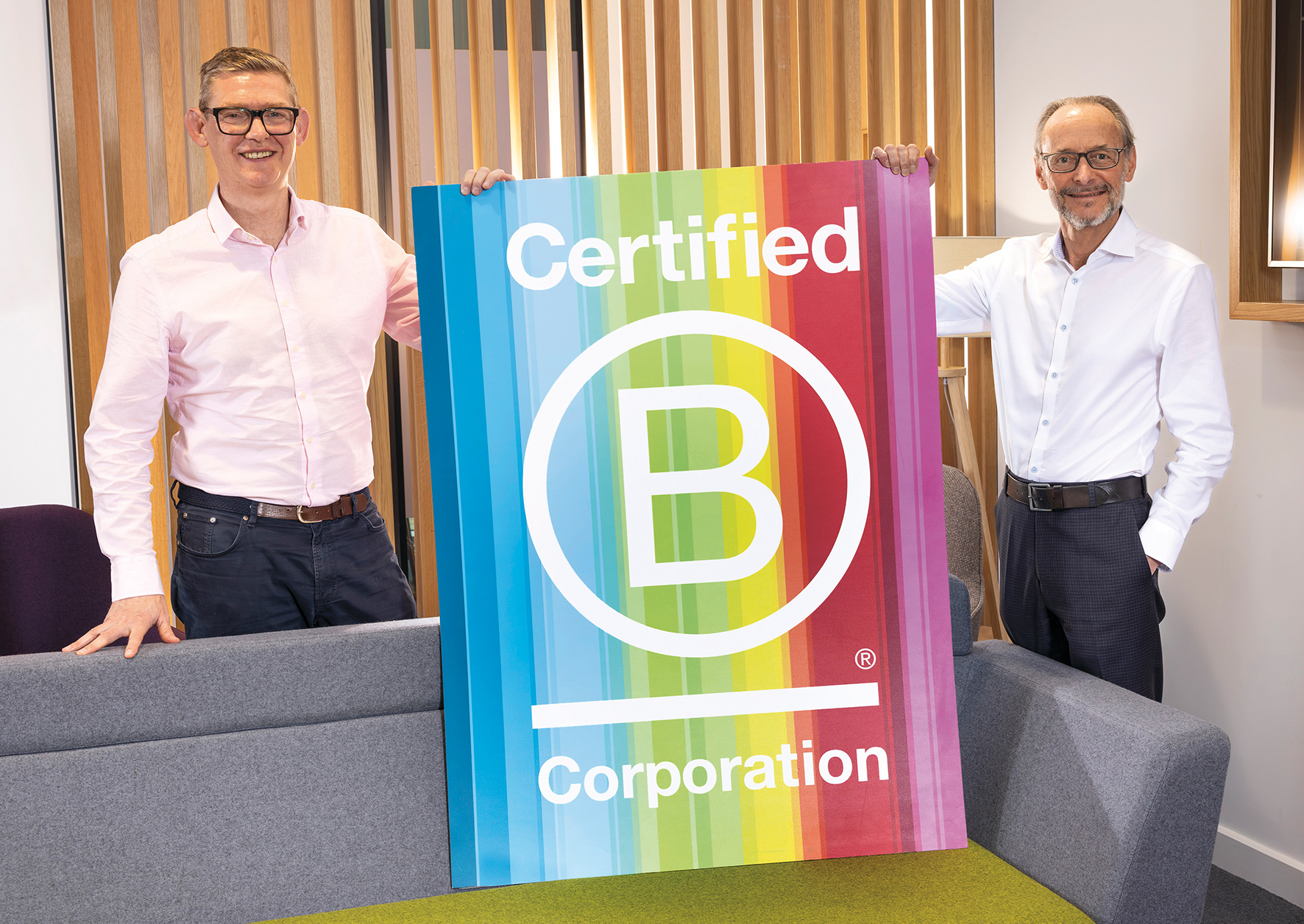
Headline image: Anthony Evans, Muckle LLP managing partner, left, with Hugh Welch, the firm’s senior partner and head of ESG strategy Picture: Mike Smith Photography
Charitable giving in the UK
A 2025 report by the Charities Aid Foundation found the state of corporate grant giving in the UK is mixed.
While North East businesses are the most generous when it comes to charitable donations, with 41 per cent of local businesses more likely to support charities than those from elsewhere, more than 75 per cent of British businesses did not support charities at all in the last year.
The same research suggests that if all of the FTSE 100 businesses gave at least one per cent of their pre-tax profits to charity, the sector could receive an extra £3 billion in funding.
Giving is good
One of the businesses supporting the charitable sector is Muckle LLP.
Through its Muckle Fund, which is managed by Community Foundation North East, the firm has donated one per cent of its profits every year since 2002.
In that time, the firm has awarded 745 grants totalling £721,000 to charities, community groups and not-for-profit organisations.
Hugh Welch, Muckle senior partner and head of the firm’s ESG strategy, says:
“We’ve given one per cent of our profits to charitable causes for years – not because we have to, but because we think it’s the right thing to do.”
“We are very fortunate to be in a position where we’re able to give financially and support our local community.”
How would a business start?
With more than 170,000 charities in the UK, it can be tricky to decide which charities to support.
Anthony Evans, Muckle managing partner, suggests considering what’s important to your business and supporting charities that align with your core values.
He says: “For many years, we have focused our grant giving on charities operating in three key areas chosen in consultation with our people.”
“These are supporting young people, overcoming disadvantage and improving social mobility.”
“Where possible, we also aim to prioritise supporting smaller charities based in the North East and Cumbria, the main geographical areas that we work in.”
Consider regular giving
Ask any charitable organisation, and it will tell you that regular and consistent giving is preferred over one-off donations.
This is because it provides a more predictable income stream, allowing charities to plan further ahead and ensure every penny is put to the best possible use.
What’s more, if the giving is unrestricted – meaning charities can choose exactly what to use the funding for – they can make the best use of those funds.
For Muckle, this regular giving takes the form of ‘follow-on funding’.
One of the charities that has seen the impact of that is the Country Trust, a national education charity that connects children from areas of high disadvantage with the land.
Since Muckle’s first donation of £500 in 2019, the charity has received nearly £20,000 worth of grants over the last three years.
But the firm hasn’t stopped giving ad hoc grants.
Hugh says: “In the earlier years of our Muckle Fund, we mainly made smaller, one-off grants.”
“Now, alongside our follow-on funding initiative, we still make ad hoc grants in response to funding requests from our people.”
“For example, we’ve given Mortal Fools – a local theatre, drama and creative learning charity – grants totalling £9800 from 2023 to 2025 following an initial grant request from one of our people.”
“We also offer boost funding if a colleague is raising money for charity through activities such as sponsored walks.”
Think about alternative support
It’s not just financial support that businesses can offer charities; giving time is another powerful way to help.
For Muckle, this takes three forms: volunteering, taking on trustee roles and providing pro bono (free) legal advice.
Anthony credits grant giving as the foundation for many of these opportunities.
He says: “Our grant giving has helped us connect with so many organisations.”
“What starts as a one-off grant often develops into a long-term relationship between Muckle and the charitable organisation, which creates even more opportunities for us to support.”
“We are especially proud to have increased our total firm volunteering time to 1616 hours in the last year – an increase of six per cent – and are looking to further build on this in the coming years.”
B-ing better
Any strategy is, by nature, a work in progress, and corporate giving is no different.
Hugh believes that becoming part of the B Corp movement can give businesses all the tools needed for continuous improvement.
He adds: “Being certified as a B Corp business has given us a clear framework of how we can continue to improve and make meaningful progress.”
“It’s a reminder that responsible business is an ongoing commitment, and one that becomes even more powerful when shared with like-minded organisations.”
March 16, 2026